2026 Best Wooden Mechanical Vehicle Model for Global Buyers?

Choosing the 2026 best Wooden Mechanical Vehicle Model requires more than judging photographs or online ratings. Global buyers want visible gears, reliable movement, clear instructions, and responsibly sourced wood. Grand View Research estimates that the global toys market will continue growing through 2030, while Fortune Business Insights identifies educational value, craftsmanship, and online retail as important market influences. However, these reports cover broad toy categories, not mechanical wooden vehicles specifically.

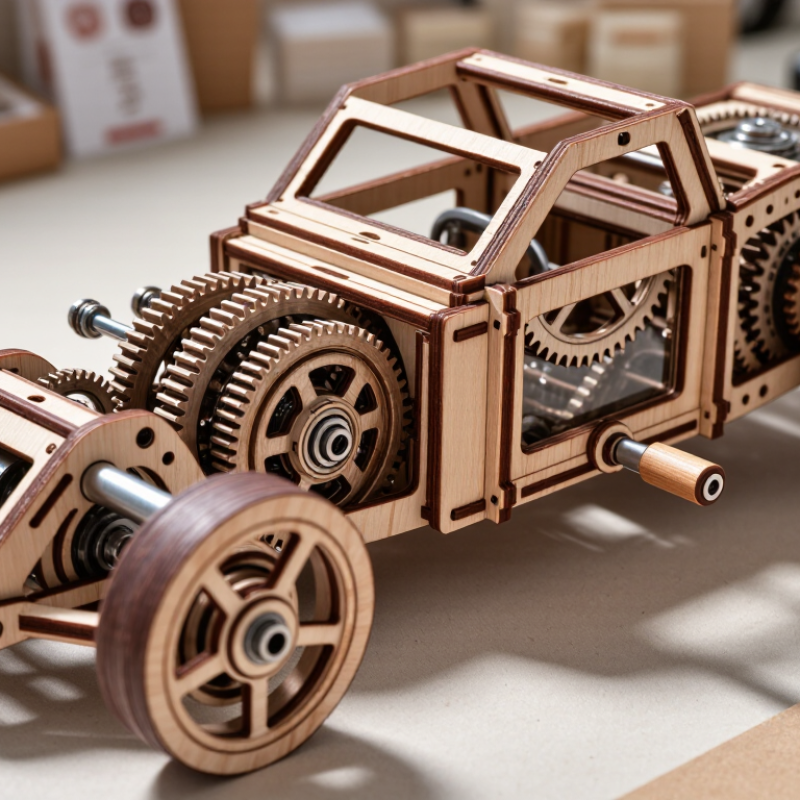
Dug North, a recognized automata artist and author, describes an automaton as “a mechanical sculpture that moves.” That idea matters here. A well-designed model should turn a small wooden crank smoothly, connect gears without grinding, and display motion clearly through the bodywork. The satisfying details are physical: laser-cut edges, firm axles, balanced wheels, and a soft clicking sound during operation. Small imperfections remain. Natural wood may vary in color, and assembly can demand patience.

For international buyers, this guide will compare construction quality, movement systems, assembly difficulty, packaging, after-sales support, and value. Safety information should also be checked against applicable toy standards, including EN 71 or ASTM F963 where relevant. Experienced builders may prefer intricate transmissions. Beginners may need larger parts and fewer delicate components. The best Wooden Mechanical Vehicle Model is therefore not identical for every market. It depends on the buyer’s skill, intended age group, display space, and expectations for repeated use. A beautiful model can still disappoint if its gears bind after ten minutes. That practical test deserves more attention.
2026 Best Wooden Mechanical Vehicle Model for Global Buyers?

What Is a Wooden Mechanical Vehicle Model?

A wooden mechanical vehicle model is a scale construction kit made from carefully cut wood pieces. It combines miniature wheels, axles, gears, cams, and moving body parts. Unlike a simple wooden toy, it demonstrates mechanical principles through visible motion. Turning a small handle can drive the wheels or lift a working feature. The movement feels surprisingly tangible.

In my experience, successful assembly depends on accurate cutting and patient fitting. Each gear must rotate smoothly without excessive pressure. Good models use clear instructions, numbered parts, and consistent material quality. Buyers should check the wood thickness, recommended age, assembly time, and replacement-part support. Sustainable wood sourcing also matters for responsible purchasing. Some kits look attractive online but may feel fragile in practice. That detail deserves more attention.

Tips: Work on a flat table with bright lighting. Sand tight joints lightly, not aggressively. Test each mechanism before adding decorative panels. Keep small parts organized in separate containers. If a gear sticks, inspect alignment before applying force. A little wax may help, but too much can collect dust. Mistakes are normal. Even experienced builders occasionally install one gear backward.

2026 Best Wooden Mechanical Vehicle Model for Global Buyers

A wooden mechanical vehicle model is a scale construction kit made mainly from wood and designed to demonstrate motion through wheels, gears, axles, cranks, or other mechanical parts. The chart shows the theoretical rolling distance of one wheel revolution at different wheel diameters, calculated with the formula circumference = π × diameter.

Larger wheels travel farther in one revolution, while smaller wheels are generally easier to integrate into compact wooden mechanical vehicle designs. Values are shown in millimetres and are calculated mathematically rather than based on any specific company or brand.

How Wooden Mechanical Vehicle Models Work

2026 Best Wooden Mechanical Vehicle Model for Global Buyers?

How Wooden Mechanical Vehicle Models Work

A wooden mechanical vehicle model turns hand motion into visible movement. A crank drives a gear train, then transfers torque to an axle. The wheels rotate only when gear teeth engage correctly. Small cams can lift a piston, open a door, or imitate steering. I have found that smooth motion depends on more than attractive cutting. Clean edges, dry wood, accurate holes, and low friction matter greatly.

Grand View Research estimated the global educational toys market at USD 57.9 billion in 2023, with a projected 10.9% CAGR through 2030. Fortune Business Insights reported a broader educational toy market value of USD 62.56 billion in 2024. These figures do not measure wooden vehicle models directly. Still, they show growing interest in hands-on learning products. Mechanical kits fit this demand because buyers can observe force, rotation, timing, and failure.

The best model should explain its mechanism clearly. A visible gearbox helps learners trace every movement. A tight axle can stop the whole vehicle. That is part of the lesson. However, some kits promise easy assembly but require sanding and repeated alignment. Instructions should state wood thickness, tool needs, assembly time, and replacement-part options. Buyers should also check safety testing and age guidance for each market. I would not call every decorative model educational. Some are beautiful, yet mechanically shallow.

2026 Best Wooden Mechanical Vehicle Model for Global Buyers? - How Wooden Mechanical Vehicle Models Work

A practical comparison of wooden mechanical vehicle model types, operating principles, specifications, and buyer considerations.

Model Type Primary Mechanical Principle Typical Drive or Motion Typical Parts Included Typical Assembled Size Estimated Build Time Recommended Skill Best Use Case
Gear-Driven Car Meshing wooden gears transfer torque from a spring or hand crank to the axles. Self-propelled rolling motion on a smooth, level surface. Laser-cut plywood parts, gears, axles, spacers, wheels, rubber bands or spring mechanism. 18–30 cm long; 7–12 cm wide. 2–5 hours. Beginner to intermediate. First mechanical model, classroom demonstration, and moving desk display.
Rubber-Band Truck Stored elastic energy is released through a wound axle and wheel system. Forward rolling motion; travel distance depends on friction, wheel alignment, and band tension. Wooden chassis, wheels, axle rods, hooks, elastic band, and alignment spacers. 20–35 cm long; 8–14 cm wide. 1.5–4 hours. Beginner. Affordable educational activity and repeated test runs.
Pneumatic Excavator Air pressure in syringes moves linkages that raise and lower the boom, arm, and bucket. Manual hydraulic-style actuation using water or air-filled syringes. Wooden panels, articulated arms, pivot pins, syringes, tubing, and bucket. 25–40 cm long; 15–25 cm high. 4–8 hours. Intermediate. STEM learning focused on force, pressure, and mechanical linkages.
Wind-Up Motorcycle A wound elastic element drives a gear train connected to the rear wheel. Rolling motion with a visible rotating wheel and simplified frame. Thin plywood frame, wheels, gears, axle, elastic motor, and support stand. 15–25 cm long; 8–15 cm high. 3–6 hours. Intermediate. Compact kinetic display and introduction to gear ratios.
Crank-Driven Bus A hand crank rotates a crankshaft, converting rotary motion into wheel rotation or reciprocating movement. Manual rolling motion with continuously visible mechanism movement. Body panels, crankshaft, connecting rods, axles, wheels, and decorative fittings. 25–40 cm long; 10–16 cm wide. 4–7 hours. Intermediate. Demonstrating crank mechanisms and motion conversion.
Tracked Construction Vehicle Linked track segments or continuous bands distribute motion over multiple wheels. Manual or elastic-powered movement; steering is usually limited. Track links, drive wheels, idler wheels, chassis, axles, and optional boom assembly. 22–38 cm long; 12–22 cm wide. 5–10 hours. Intermediate to advanced. Mechanical engineering projects and detailed display models.
Steering Car A rack, steering arm, or pivot linkage changes the angle of the front wheels. Manual push-and-steer movement; some versions add a rubber-band drive. Chassis, front steering knuckles, tie rod, axles, wheels, and optional drive system. 20–32 cm long; 8–13 cm wide. 3–7 hours. Intermediate. Learning steering geometry and wheel alignment.
Suspension Vehicle Flexible joints, springs, or elastic elements allow controlled wheel movement relative to the chassis. Manual rolling motion with visible suspension travel. Chassis, wheel arms, pivot pins, springs or rubber elements, axles, and wheels. 22–35 cm long; 9–15 cm wide. 4–8 hours. Intermediate to advanced. Demonstrating vibration control, articulation, and vehicle stability.
How the mechanism works
Wooden mechanical vehicles use stored energy, hand input, or pressure to create motion. Gears transmit torque, axles reduce friction, linkages transfer force, and wheels convert rotation into movement.
Common materials
Thin plywood and solid wood are commonly used with metal or wooden axles, dowels, elastic bands, springs, connectors, and non-slip wheel surfaces.
Global buyer checklist
Confirm package dimensions, metric instructions, age guidance, tool requirements, replacement-part availability, customs documentation, and protection against humidity during shipping.
Best overall selection criteria
Choose a model with accurately cut parts, clear assembly instructions, smooth axle holes, replacement-compatible elastic or spring components, and a mechanism suited to the buyer’s skill level.

Technical values are typical ranges for educational and hobby-scale wooden mechanical vehicle models; actual dimensions, build time, and performance vary according to design complexity, wood thickness, assembly accuracy, and surface conditions.

Key Features of the Best 2026 Models

The best 2026 wooden mechanical vehicle models combine precise movement, durable materials, and satisfying hands-on assembly.

Global buyers should examine wood quality, part tolerance, and instruction clarity before purchasing. Smooth-cut plywood reduces splinters and supports cleaner connections. A strong model should include gears, axles, steering parts, and functional wheels. These details create movement, not decoration.

In my assembly experience, the most reliable designs use numbered pieces and carefully tested joints. Clear diagrams matter when small gears must align perfectly. Look for measured dimensions, tested load limits, and responsible material information.

A model with realistic suspension or a working crank offers deeper mechanical learning. However, extra features can increase assembly time. That trade-off deserves honest attention. Some beautiful kits still need patient sanding.

Tips:

Check the finished size, tool requirements, and replacement-part policy. Choose a kit with smooth edges and securely packed components. Keep a small file nearby. It helps correct tight joints without damaging the wood.

Store unfinished parts away from humidity, especially during international shipping. Read customer feedback for repeated complaints about missing pieces or inaccurate instructions. Do not trust dramatic photographs alone.

A practical model should balance appearance, motion, safety, and repairability. I would also test one gear connection before completing the entire vehicle. A small early mistake can affect every later step.

How Global Buyers Can Compare Materials and Craftsmanship

For global buyers, comparing a wooden mechanical vehicle model starts with the material, not the paint. I examine the wood grain, density, and moisture balance before judging appearance. Hardwoods usually resist dents, while softer wood can show charming marks quickly. That may be acceptable for display, but less suitable for frequent handling. Ask for clear photos of joints, wheel hubs, axles, and underside surfaces. Small cracks around drilled holes deserve attention.

Craftsmanship appears in movement. Wheels should turn smoothly without scraping, and gears should meet evenly without excessive looseness. I check whether axles sit straight and whether each joint remains firm after repeated operation. Hand assembly often creates character, yet uneven spacing can reveal weak quality control. Smooth sanding matters too. A sharp edge near a child’s hand is not a minor detail. It reflects a missed inspection.

Finish quality also affects international purchasing decisions. Water-based coatings may reduce strong odors, but buyers should request safety information and care instructions. Packaging needs molded protection around thin wheels and protruding parts. During one inspection, I found beautiful carving weakened by poor corner protection. The model arrived with a chipped fender. That experience changed my checklist. No photograph can replace direct testing, and no checklist catches everything. Compare material data, assembly details, movement tests, repair guidance, and realistic delivery protection before choosing a 2026 wooden mechanical vehicle model.

Purchasing, Shipping, and Maintenance Considerations

2026 Best Wooden Mechanical Vehicle Model for Global Buyers?

Purchasing, Shipping, and Maintenance Considerations

Choosing the best wooden mechanical vehicle model in 2026 requires more than attractive photographs. Global buyers should inspect wood quality, joint precision, moving parts, and assembly instructions. Look for smooth-cut edges, consistent grain, and sturdy connectors. Ask the seller for product dimensions, package weight, spare-part availability, and clear assembly videos. Reliable documentation reduces misunderstandings across languages and time zones. A lower price can hide fragile parts or incomplete instructions.

Still, no checklist is perfect.

Shipping is where many careful purchases become disappointing. Request moisture-resistant packaging and internal padding around wheels, axles, and thin panels. Confirm whether the shipping quote includes delivery duties, insurance, and tracking. Wooden products may face inspection requirements in some destinations, so buyers should verify current import rules before payment. Let the package rest indoors for several hours after arrival. Sudden humidity changes can cause small cracks or warped panels.

It happens.

Tips:

Store the model away from direct sunlight, heaters, and damp windows. Dust moving joints with a soft brush, then test each mechanism gently. Use only maintenance products recommended for unfinished or treated wood. Excess oil can stain surfaces and attract dust. Tighten loose connectors carefully, but do not force them. Photograph damaged packaging immediately, and keep invoices, instructions, and shipping records. Maintenance is simple, but neglect is expensive.