
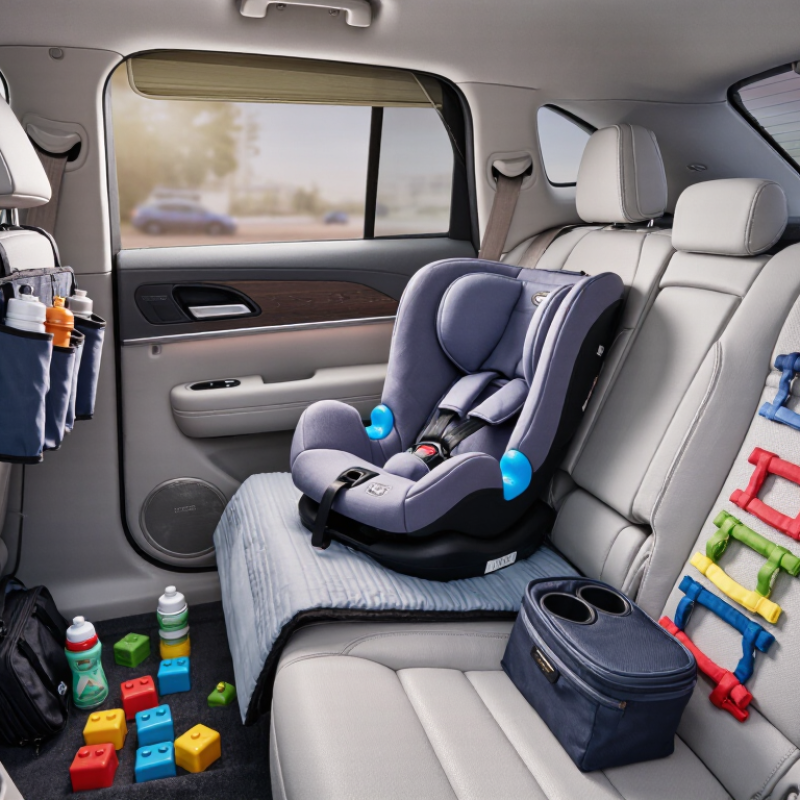
For global buyers, child car seat accessories must fit both the seat and the vehicle. Compatibility starts with the seat model, installation method, harness route, and headrest shape. An accessory that clips on easily may still block a belt, loosen a strap, or affect side protection. Check the vehicle manual and the seat manual together. Measure twice. Do not guess.
Standards also vary by market. Look for clear approval markings required in the destination country, such as current child restraint regulations and test references. A familiar-looking label is not enough. Ask the seller for installation instructions, material details, and recent compliance information. Avoid accessories that alter the seat shell, harness, buckle, or impact-absorbing parts. Seat-back organizers, mirror systems, sun shades, and protective mats need careful placement around airbags and moving belts. Some products are advertised as universal, but “universal” often means limited.
Maintenance affects safety over time. Inspect clips, stitching, buckles, elastic, and plastic after every trip. Clean fabric according to the manufacturer’s instructions, since harsh chemicals can weaken fibers or remove labels. Replace damaged or heat-deformed parts. Keep purchase records and check recalls through official transport or consumer-safety authorities. I have found that convenience can encourage poor habits, especially when an accessory makes the harness harder to see. Remove anything that creates slack, pressure, or confusion. If instructions conflict, pause and seek qualified local guidance rather than improvising.