
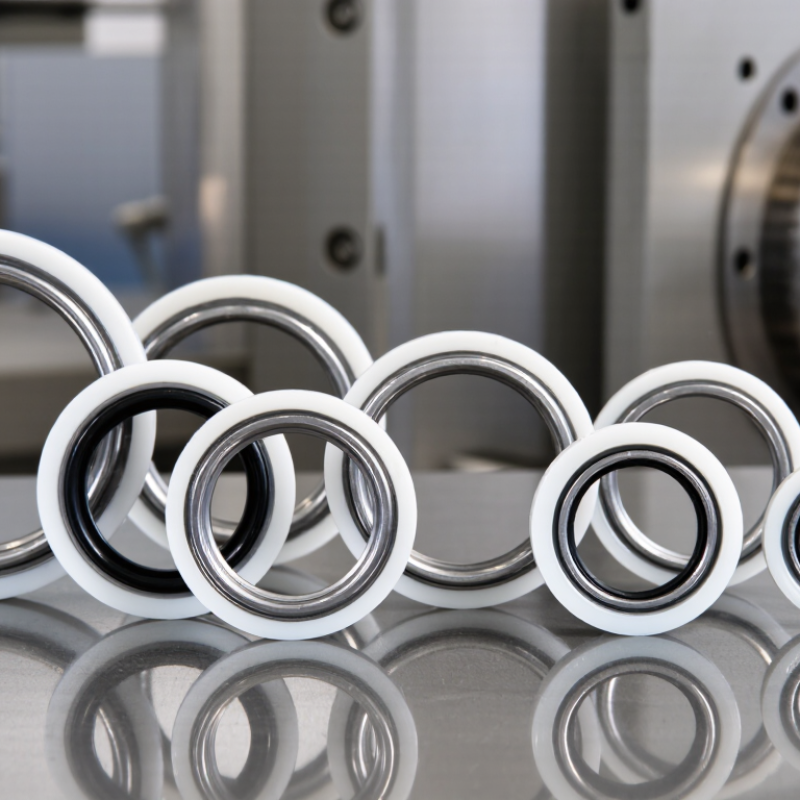
PTFE and Elgiloy Lip Seals: Materials, Structure, and Industrial Functions
PTFE provides a low-friction sealing jacket for demanding industrial equipment. Its chemical resistance helps protect against oils, solvents, steam, and process fluids. However, PTFE can deform under heavy pressure or poor installation. That limitation deserves attention.
Elgiloy, a cobalt-based alloy, usually works as the energizing spring inside the seal. It supplies continuous radial force when temperature changes or shaft movement reduce contact pressure. Its corrosion resistance and fatigue strength suit pumps, valves, compressors, and rotating equipment. The combination is practical, not magical.
The seal structure normally includes a precision-formed PTFE lip, a spring energizer, and a supporting case or gland. Lip geometry controls friction, leakage, and pressure response. Different designs support rotary shafts, reciprocating rods, vacuum service, or high-temperature applications. Buyers should check shaft finish, hardness, runout, pressure, speed, and media compatibility before choosing among seven seal configurations. Installation experience shows that a clean groove and a protected shaft edge matter greatly. Even a premium material can fail against a scratched surface. Testing under real operating cycles is more reliable than relying on a catalog temperature range. Some designs perform well initially but lose stability after repeated thermal cycling. That is where careful inspection becomes valuable.