
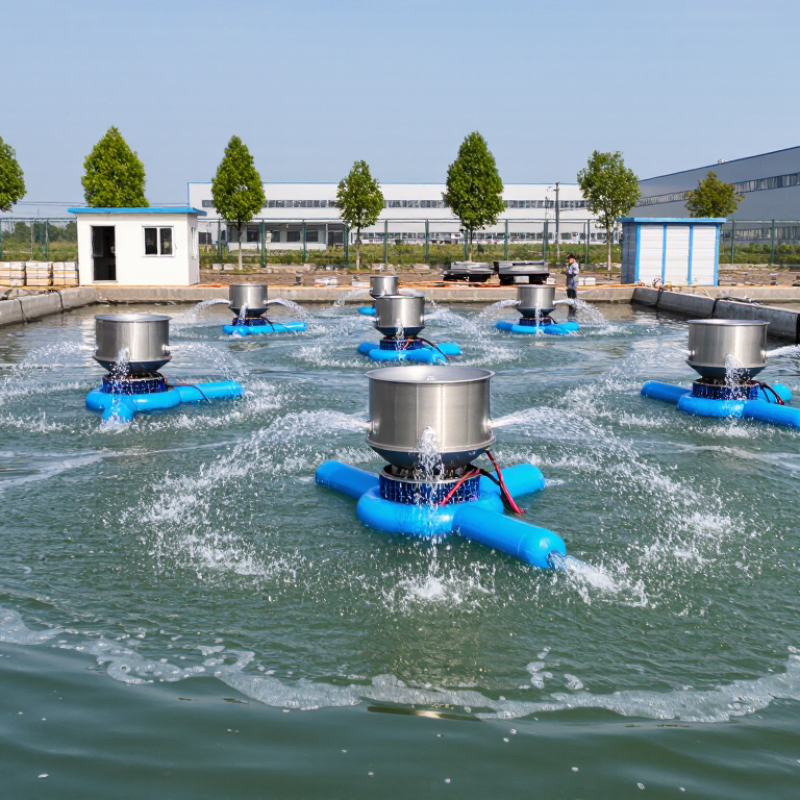
A floating pump aerator is a surface-mounted machine that moves pond water and adds oxygen. Its motor drives an impeller or propeller beneath a buoyant frame. The rotating unit pulls water upward, breaks it into droplets, and exposes more water to air. Oxygen then enters through turbulence and surface contact.
It is not simply a decorative fountain. A properly sized aerator can circulate warm, oxygen-poor water toward the surface. This helps reduce stagnant zones, especially before sunrise when dissolved oxygen is often lowest. The FAO’s The State of World Fisheries and Aquaculture 2024 reports that aquaculture supplied 51% of global aquatic animal production in 2022. That scale makes oxygen management increasingly important. US EPA guidance identifies about 5 mg/L dissolved oxygen as a useful benchmark for supporting many aquatic organisms, although species and temperature change the requirement.
Selection requires more than reading horsepower. Buyers should examine oxygen-transfer capacity, water depth, organic loading, electrical supply, float stability, and local weather. In practical pond commissioning, operators should measure dissolved oxygen at several depths, not only beside the machine. One unit may improve a visible area while leaving a bottom pocket depleted. A neat specification sheet can still mislead. Performance also changes with fouling, algae, and voltage variation. The honest approach is to compare tested oxygen-transfer data with real pond conditions, then monitor results after installation.