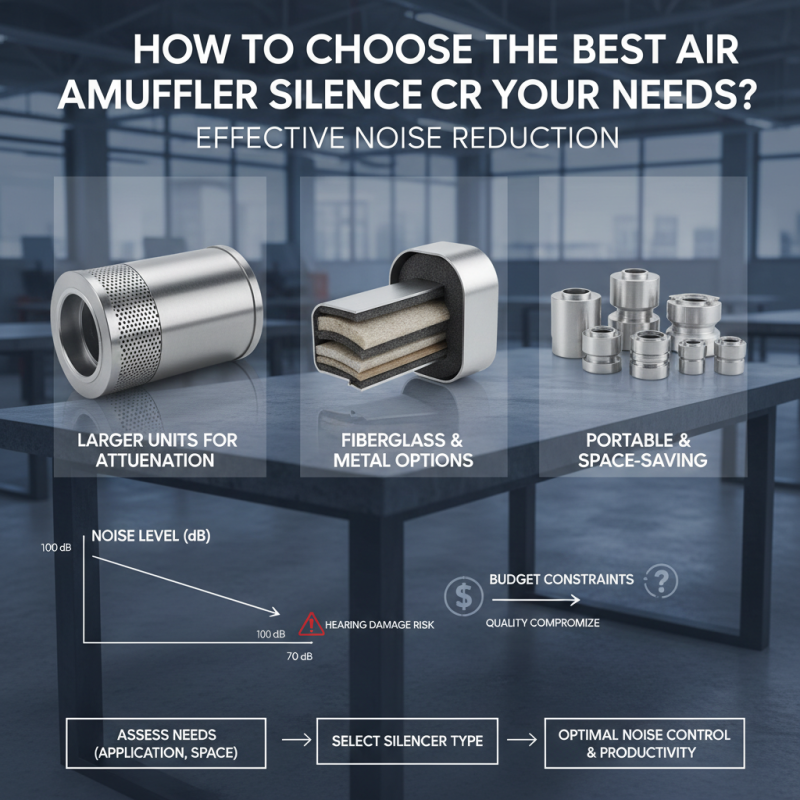
Choosing the right Air Muffler Silencer is crucial for effective noise reduction. Reports indicate that industrial noise can exceed 100 decibels, leading to hearing damage. In such environments, selecting the proper silencer becomes vital for health and productivity.
Various factors influence the choice of an Air Muffler Silencer. Size matters; larger units often provide better attenuation. Material composition also plays a role. Fiberglass and metal options each have their advantages. However, budget constraints can limit choices, leading to compromises on quality.
Understanding specific needs is essential. Does the application require portable options? Are there space limitations? These questions guide the selection process. Choosing the wrong silencer could result in inadequate noise control. It is important to reflect on these aspects to ensure the best operational outcomes.
Air muffler silencers are essential components in reducing noise generated by air compressors and pneumatic tools. They play a crucial role in creating a quieter work environment. In noisy industries, exposure to high decibel levels can lead to hearing loss. According to the National Institute for Occupational Safety and Health (NIOSH), sounds above 85 dB can cause damage over time. This makes selecting the right air muffler silencer vital.
When considering air muffler silencers, one must understand their functions. These devices work by dissipating sound waves and controlling air flow. Some silencers use baffles to break up sound waves, while others employ absorptive materials. The choice depends on the specific application and desired noise reduction level. Data from the American National Standards Institute (ANSI) suggests that proper muffler selection can reduce noise levels by up to 30 dB, improving comfort significantly.
In practice, the effectiveness of a silencer can vary. Factors like air pressure, flow rate, and installation can impact performance. It’s not uncommon for users to overlook these details, leading to inadequate noise reduction. Regular assessments of the silencer’s condition are necessary. Remind yourself that a silencer’s life span might not be as long as expected. This calls for periodic evaluations to maintain optimal noise control.
When selecting an air muffler silencer, consider the noise reduction level. The primary purpose of a silencer is to lower sound output. Look for decibel ratings that indicate effectiveness. Lower numbers usually mean quieter operation, but personal tolerance to noise varies.
Material is also important. Different materials can affect sound absorption. Metal mufflers tend to last longer but may not silence as well as other options. Meanwhile, foam or rubber silencers may offer better sound deadening. Also, think about the environment. Outdoor use might require weather-resistant materials.
Size plays a role in performance. A silencer that is too small may not function optimally. On the other hand, oversized models can affect airflow. Know your space requirements before making a choice. It’s okay to experiment, but measuring your setup is crucial. Finding the right balance can take time and sometimes lead to unexpected results.
When selecting an air muffler silencer, understanding the different types is crucial. Each type serves a unique purpose and offers various features. One common type is the reactive muffler. It uses sound waves to cancel noise. These are effective in reducing decibel levels in many industrial settings. However, they can be bulky and may not fit seamlessly into certain systems.
Another popular option is the absorptive muffler. This type uses sound-absorbing materials to diminish noise. It is lighter and often easier to install. These mufflers excel in environments where space is limited. They may not provide as much noise reduction in certain frequencies, which could be a drawback. Users need to consider their specific requirements carefully.
For those needing versatility, a combination muffler can be ideal. It merges the benefits of both reactive and absorptive types. This option often delivers a balanced performance. Yet, it can be more complex and require professional installation. Assessing the intended application and installation space is essential. Each type presents advantages, but none are perfect for every situation.
| Type of Air Muffler Silencer | Noise Reduction (dB) | Application | Diameter (inches) | Material |
|---|---|---|---|---|
| Straight Through Muffler | 15-25 | Automotive, Motorcycles | 2-4 | Aluminum |
| Reversing Muffler | 20-30 | Industrial Equipment | 4-6 | Stainless Steel |
| Absorptive Muffler | 30-40 | Compressors, Fans | 3-5 | Fiberglass |
| Reactive Muffler | 25-35 | Power Generators | 5-7 | Carbon Steel |
Choosing the right air muffler silencer requires careful consideration of noise reduction performance. Noise reduction is measured in dB. The lower the dB rating, the more effective the muffler is at reducing noise. For a quieter environment, aim for lower dB ratings.
When assessing options, evaluate the installation process. Some models are easier to install than others. Complicated installations can lead to mistakes, so look for user-friendly designs. Remember to think about the application. A muffler suited for industrial environments may differ from one for residential use.
Tips: Consider user reviews and experiences. They often provide real-life insights into performance. Check if the product comes with a warranty. This can indicate manufacturer confidence. Additionally, always assess the materials used. Higher quality materials generally offer better sound dampening.
When installing an air muffler silencer, proper attention to detail is crucial. Begin by assessing your installation area. Ensure it is clean and free from debris. A cluttered space can lead to poor installation. Use necessary tools like wrenches and screwdrivers. Take your time; rushing can cause mistakes.
Pay attention to the alignment of the silencer. If it’s misaligned, it may not function effectively. Tighten all connections but avoid over-tightening. This can damage parts and lead to leaks. After installation, check for any unusual noises during operation. A simple sound can indicate a problem. Regular checks can prevent bigger issues.
Maintenance is equally vital for longevity. Clean the silencer periodically to remove dust and residue. Inspect for wear and tear. Look for rust or corrosion, which can decrease performance. Replace any damaged components immediately. Failing to do so may lead to more significant repairs later on.