
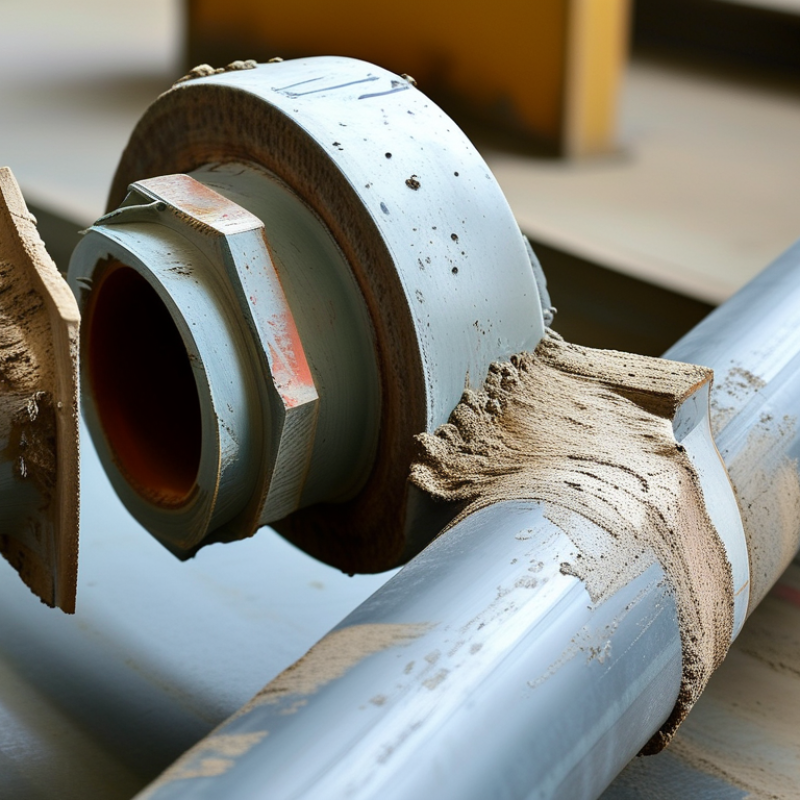
Match the ceramic lining to the conveyed material, not only to its name. Iron ore slurry can contain sharp, dense particles that rapidly cut exposed rubber. The USGS Mineral Commodity Summaries 2024 reported about 2.5 billion metric tons of global iron ore production in 2023. That volume explains the severe duty found in mining pipelines. Alumina ceramic, rated near 9 on the Mohs hardness scale, suits highly abrasive particles. However, hardness alone is not enough.
Particle size, impact angle, slurry density, and flow speed must guide the selection. Fine cement slurry behaves differently from coarse gravel. The Global Cement and Concrete Association reports global cement production at roughly 4.1 billion tonnes annually. Cement particles may scour bends, reducers, and discharge points continuously. A rubber-backed ceramic design can absorb vibration and minor impact, while ceramic tiles resist sliding abrasion. It is a useful balance.
Do not ignore chemistry. Acidic process water can weaken unsuitable rubber compounds, even when the ceramic remains intact. Check operating temperature, pH, solids concentration, and minimum bending radius with measured site data. Field inspections often reveal a missed detail: wear concentrates near elbows, clamps, and poorly aligned joints. I have seen specifications overemphasize ceramic hardness and underestimate rubber fatigue. That approach needs reconsideration. Select the lining pattern after reviewing particle size distribution and actual pressure fluctuations, not catalogue averages.