How to Choose the Right Types of Pumps for Your Needs?

Choosing the right types of pumps can significantly impact your projects. The multitude of options available can be overwhelming. Understanding the differences between these types is crucial for efficiency and effectiveness.

When assessing your needs, consider the specific applications for the pumps. Different environments may require different features. For instance, certain types of pumps are better for handling viscous fluids, while others excel with clear liquids. Knowledge of these fruits of engineering provides a solid foundation for decision-making.

Yet, even experienced professionals sometimes struggle with selection. Factors like maintenance, cost, and durability can complicate matters. Recognizing limitations in options allows for better choices. Each type of pump comes with its strengths and weaknesses, and it’s essential to weigh these carefully. Ultimately, making the right choice can save time and resources in the long run.
How to Choose the Right Types of Pumps for Your Needs?

Understanding the Different Types of Pumps Available in the Market

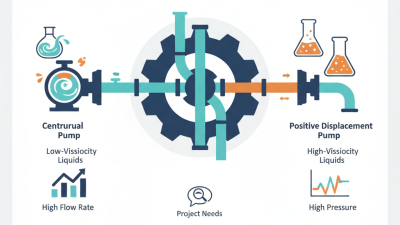
When selecting pumps for your needs, understanding the variety available is crucial. Pumps are categorized primarily into positive displacement and centrifugal types. Positive displacement pumps move a fixed amount of fluid per cycle, making them ideal for applications requiring precise flow. Centrifugal pumps, on the other hand, use rotational energy to move fluid, catering to larger volumes but with less precision.

Consider the specifics of your application. What fluid will you be pumping? Is it viscous? Will it require high pressure? Such questions guide your choice. Additionally, think about maintenance needs. Some pumps demand regular servicing. Others are more forgiving. Your environment matters too. A corrosive environment may limit your options.

Consider your budget. High-end pumps last longer but demand a larger initial investment. Reflect on the trade-offs involved. Sometimes, you may think you need a high-performance pump, but a moderate option suffices. To make an informed choice, consult with professionals. They can provide insights tailored to your application.

Identifying Your Specific Pumping Needs and Requirements

Identifying your specific pumping needs is crucial for selecting the right type of pump. Begin by assessing the nature of the fluid you will be handling. For instance, fluids with varying viscosity or temperature may require different pump technologies. According to the Hydraulic Institute, nearly 75% of pump failures result from improper pump selection or installation. Understanding the properties of the fluid can prevent costly mistakes.

Next, consider the required flow rate and discharge pressure. These parameters are foundational in choosing an appropriate pump. The American Society of Mechanical Engineers (ASME) suggests that accurately measuring the needed flow rate can improve system efficiency by up to 30%. Underestimating these requirements can lead to inadequate performance or pump wear. Furthermore, consider the environmental conditions. Pumps must often withstand elements like temperature fluctuations and corrosive materials.

Take into account the installation space and maintenance capabilities. Limited access may restrict pump type or size. Regular maintenance is essential for ensuring longevity. Industry reports indicate that poorly maintained pumps can consume 10-30% more energy than well-maintained units. Reflecting on these factors can inform your pump selection and minimize long-term operational issues.

Evaluating Pump Performance Metrics That Matter for Your Application

When choosing pumps, evaluating performance metrics is crucial. Flow rate is often a key indicator of a pump's effectiveness. A common requirement is a flow rate suitable for your application. For example, many industrial processes demand a rate of 20 to 100 gallons per minute. However, specific needs can vary widely.

Another vital metric is the pump's efficiency. According to industry reports, efficient pumps can reduce energy consumption by up to 30%. This not only lowers operational costs but also minimizes environmental impact. It's essential to consider the energy requirements alongside the operational demands.

Additionally, head pressure is a critical factor. Understanding the relationship between head and flow can help identify potential issues early. Many users overlook the importance of this metric. Not evaluating it leads to performance challenges. Always examine how head pressure correlates to your needs. Real-world experience suggests that many applications may struggle due to insufficient head pressure. This can significantly hinder operational efficiency.

Considering Energy Efficiency and Operational Costs in Pump Selection

Selecting the appropriate pump involves evaluating energy efficiency and operational costs. Pumps account for 20-30% of industrial energy use. A report from the Department of Energy indicates that inefficient pumps can significantly increase electricity expenses, sometimes by thousands yearly.

Energy-efficient pumps often employ advanced technologies. These include variable frequency drives (VFDs) that adjust motor speed based on demand. Implementing VFDs can lead to energy savings of 30-50%. It is crucial to analyze the long-term operational costs rather than just the initial purchase prices. Many buyers overlook maintenance costs, which can accumulate over time.

Consider the Total Cost of Ownership (TCO) when selecting pumps. TCO includes installation, energy consumption, maintenance, and repair expenses. Many industries overlook energy audits that can identify inefficiencies. Failing to assess these factors may lead to higher long-term costs and environmental impacts. Conducting a life cycle assessment can bring clarity to these hidden costs, ensuring a more informed decision for sustainable operations.

How to Choose the Right Types of Pumps for Your Needs? - Considering Energy Efficiency and Operational Costs in Pump Selection

Pump Type Energy Efficiency Operational Cost (Annual) Maintenance Frequency Best Use Case
Centrifugal Pump High $1,200 Monthly Water Supply Systems
Positive Displacement Pump Moderate $1,500 Bi-Monthly Sludge and Viscous Fluids
Submersible Pump High $900 Quarterly Drainage and Sewage
Diaphragm Pump Moderate $1,000 Monthly Chemical Transfer
Gear Pump High $1,300 Weekly Hydraulic Fluid Transfer

Assessing Installation and Maintenance Factors in Pump Choice

When selecting the right pump, assessing installation and maintenance factors is crucial. The space where the pump will be installed plays a significant role. A compact area requires smaller, more versatile pumps. If the installation space is limited, design and dimensions matter. Long-term accessibility for maintenance also needs consideration. Pumps in hard-to-reach areas can lead to costly service delays.

Maintenance requirements will vary by pump type and application. Regular checks on seal integrity and lubrication are essential. The ease of accessing these components can dictate choosing one pump over another. Pumps that demand frequent servicing might not be ideal for remote setups. It's necessary to think about the overall maintenance cost over the equipment's lifespan. Some pumps are designed for high durability, which reduces the need for constant upkeep.

Installation training for personnel is often overlooked. Ensuring that the installation team understands the pump’s specifics is vital. Improper installation can lead to inefficiencies and potentially hazardous situations. Recognizing potential challenges and ensuring that staff are equipped with the right knowledge can make a significant difference. Balancing initial costs with long-term maintenance and operational efficiency is key.

Pump Selection: Installation and Maintenance Factors