How to Choose the Best 3 Pump System for Your Needs?

Choosing the best 3 pump system begins with the real operating conditions, not a catalogue headline. A system may need three pumps for continuous duty, peak demand, maintenance flexibility, or process safety. These goals are different. Treating them as interchangeable can create unnecessary energy costs.

Dr. Lev Nelik, a respected pump specialist and author, puts it clearly: “A pump system must be selected as a system, not as an isolated pump.” His point remains practical. Check the required flow, total dynamic head, fluid temperature, viscosity, solids content, and daily operating hours. Then decide whether the pumps should run in parallel, operate as duty-assist units, or include a dedicated standby pump. A stainless-steel pump may suit clean water, while abrasive slurry demands different materials, seals, and tolerances.

Look closely.

Real experience often reveals details that spreadsheets miss. A pump can meet its rated flow yet perform poorly when suction piping is undersized. Short cycling, vibration, air entrainment, and poor valve placement may reduce reliability. Noise matters, too, especially near occupied work areas. Energy use should be calculated across the expected operating range, not only at the design point.

There is no perfect arrangement. I have seen technically correct selections fail because maintenance access was ignored. That weakness deserves honest review. A dependable 3 pump system balances capacity, redundancy, efficiency, controls, installation space, and lifecycle cost. Professional input, verified measurements, and recognized pump standards can turn a convenient purchase into a reliable long-term decision.
How to Choose the Best 3 Pump System for Your Needs?

Understanding What a Three-Pump System Is and How It Operates

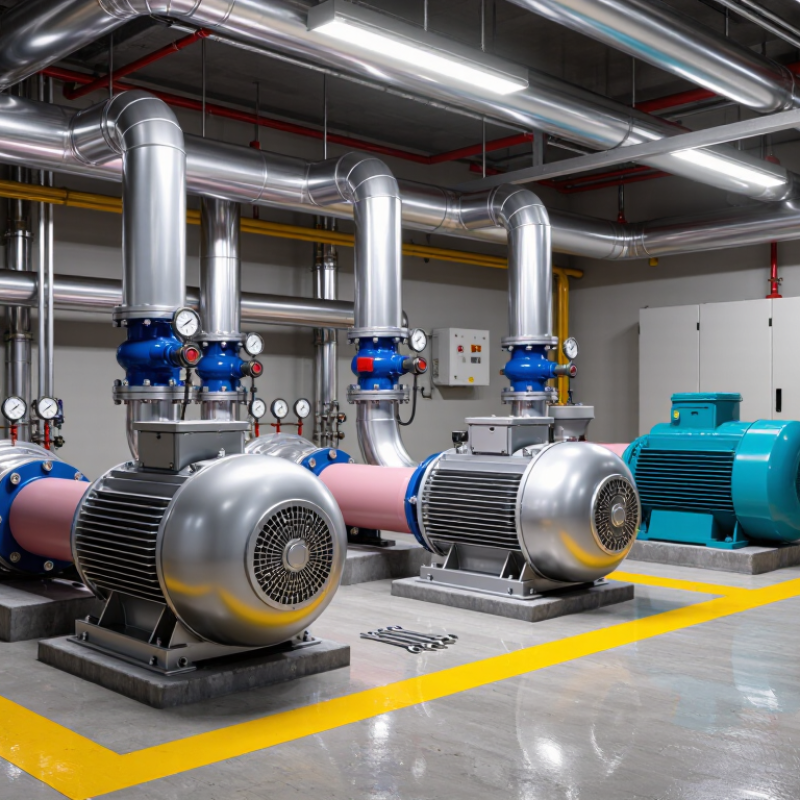
A three-pump system usually connects three centrifugal pumps to one common suction and discharge header. Controllers start one pump at low demand, then stage a second or third pump as flow rises. Each pump may include a variable-frequency drive, isolation valve, check valve, and pressure sensor. Lead-pump rotation spreads wear across the set. One pump can also remain on standby, depending on the required reliability.

Selection begins with the real duty point, not the largest flow number. Record flow, total dynamic head, fluid temperature, viscosity, and suction conditions. Compare each pump curve with the system curve. Keep normal operation near the pump’s best efficiency point, while checking NPSH margin and motor loading. The U.S. Department of Energy’s Improving Pumping System Performance sourcebook reports that pumping can use 25–50% of electricity in some industrial facilities. Small control errors can therefore become expensive.

Hydraulic Institute guidance recommends checking the allowable operating region, minimum continuous stable flow, and parallel-pump behavior. Three identical pumps are not always the best arrangement. Different pump sizes may match changing demand more efficiently, although maintenance becomes less simple. I have seen systems selected from peak flow alone; they later ran two pumps against low demand, causing cycling and wasted power. A properly tuned pressure setpoint matters. So does field testing. The European Commission’s Ecodesign work on water pumps also emphasizes system efficiency, not pump efficiency alone. That point is easy to miss.

Identifying Your Flow, Pressure, and Application Requirements

How to Choose the Best 3 Pump System for Your Needs?

Identifying Your Flow, Pressure, and Application Requirements

A three-pump system should match your real operating conditions, not an ideal estimate. Begin by measuring required flow during normal and peak demand. Record pressure at the inlet, discharge point, and highest outlet. Pipe length, elevation, valves, filters, and bends can create significant losses. A pump may meet its rated flow but fail at the required pressure. That mistake is common.

Define the application carefully. A system for clean water differs from one handling abrasive liquid, chemicals, or changing temperatures. Check fluid viscosity, solids content, temperature, and corrosion risks. Decide whether the pumps should run as duty, assist, and standby units. This arrangement can improve reliability, but only when controls rotate operating hours and detect failures. Oversizing is not always safer. It may cause short cycling, wasted energy, and unstable pressure.

Tips: Create a simple demand profile for morning, afternoon, and peak use. Measure actual conditions where possible. Do not rely only on old drawings. Leave practical capacity for growth, but question every assumption. A neat spreadsheet can still mislead. Ask a qualified engineer to review pump curves, system resistance, motor loading, and emergency behavior. Confirm that alarms, check valves, isolation valves, and maintenance access suit the installation. Small details matter.

Comparing Pump Types, Materials, and System Configurations

How to Choose the Best 3 Pump System for Your Needs?

A three-pump system usually combines duty, assist, and standby capacity. However, three pumps do not always mean better performance. Start with flow demand, pressure changes, fluid temperature, and operating hours. In commissioning work, I have seen systems fail because designers sized pumps for average demand only. Peak demand matters more.

Centrifugal pumps suit steady flow and clean, low-viscosity liquids. Positive displacement pumps perform better with thick fluids or precise dosing. Mixing types can work, but controls become more complicated. Select materials according to the fluid, not the purchase price. Stainless steel resists many corrosive liquids, while cast iron often suits general water service. Elastomers also need checking. A compatible metal cannot protect an unsuitable seal.

Configuration changes system behavior. Parallel pumps increase flow, while series pumps increase pressure. A common arrangement uses two pumps for normal demand and one standby unit. Automatic rotation can balance wear across all three pumps. Variable-speed drives may reduce energy use during low demand. Keep isolation valves accessible. Leave room around motors for inspection and seal replacement. Small access mistakes become expensive later.

Do not overlook controls.

Each pump should have overload protection, dry-run protection, and clear alarm signals. Test the standby pump under realistic conditions, not only during installation. Pipe vibration, blocked strainers, and unexpected fluid changes can alter performance. I would also review the design after several months of operation. Actual site behavior often challenges the original assumptions.

How to Choose the Best 3-Pump System for Your Needs?

Comparing centrifugal, positive-displacement, and diaphragm pump applications, together with material compatibility and system configuration.

Centrifugal Pumps

Suitable for continuous, high-flow liquid transfer. Series operation increases head, while parallel operation increases flow capacity.

Positive-Displacement Pumps

Preferred for viscous fluids and accurately controlled flow. Relief protection is required because flow is largely proportional to speed.

Materials and Configuration

Stainless steel supports corrosion resistance, cast iron suits many clean-water duties, and engineered plastics can handle selected chemicals. Confirm compatibility with the fluid, temperature, and pressure.

The chart uses idealized hydraulic multipliers for three identical pumps: pumps in series provide approximately three times the single-pump head at the same flow, while pumps in parallel provide approximately three times the flow at the same head. A two-duty/one-standby arrangement provides redundancy rather than simultaneous capacity.

Evaluating Energy Use, Controls, Maintenance, and Reliability

Choosing the best three-pump system starts with understanding the duty cycle, not simply counting pumps. Measure flow demand across quiet hours, peak production, and seasonal changes. A system that runs three motors continuously may waste energy during low demand. Variable-speed drives can adjust motor speed as pressure changes. However, poor sensor placement can cause constant speed corrections and unnecessary power use. Small errors become expensive over time.

Controls should support lead-lag rotation, automatic standby operation, and clear alarm signals. A pressure sensor near the actual demand point usually provides more useful feedback than one beside the pump discharge. Check whether the controller records runtime, starts, faults, and energy consumption. These records help technicians identify unusual patterns before a failure occurs. Keep it simple. Operators must understand the display quickly.

Maintenance access also affects reliability. Each pump should have reachable isolation valves, visible gauges, and enough clearance for seal replacement. Inspect vibration, bearing temperature, coupling condition, and electrical connections at scheduled intervals. Exercise the standby pump regularly. A standby unit that never runs may fail when needed. In field reviews, neglected check valves often create hidden pressure problems and repeated cycling. I have also seen maintenance plans focus heavily on motors while ignoring sensors. That is an imperfect approach. Reliability depends on the whole system, including pipes, controls, wiring, and human decisions. Review actual operating data after installation, because the original design assumptions may prove wrong.

How to Choose the Best 3 Pump System for Your Needs? – Evaluating Energy Use, Controls, Maintenance, and Reliability

Typical engineering ranges for clean-water booster applications. Actual performance depends on pump selection, duty point, piping, operating hours, and control settings.
Evaluation Dimension Option A: Three Fixed-Speed Pumps Option B: One VFD Pump + Two Fixed-Speed Pumps Option C: Three VFD-Controlled Pumps
Typical operating arrangement Pumps start and stop in stages to match demand. Each running pump operates near a fixed speed. The VFD pump trims output for normal demand; fixed-speed pumps assist during medium or peak demand. Each pump can modulate speed, allowing the controller to distribute flow and pressure across the pump set.
Best-fit application Stable demand, limited operating hours, and projects prioritizing low initial cost. Variable demand with a balance between energy savings, control flexibility, and capital cost. Highly variable demand, long annual runtime, strict pressure control, or high energy-cost sites.
Typical motor-speed control Approximately 100% speed while running; output is changed mainly by staging pumps on or off. Approximately 30–100% speed for the VFD pump; fixed-speed pumps generally run at full speed. Approximately 30–100% speed, subject to the motor, pump, drive, and minimum stable operating limits.
Part-load energy performance Usually weakest at low demand because a running pump may operate away from its best-efficiency point and excess pressure may be throttled. Typically better than an all-fixed-speed arrangement because the VFD pump can follow normal demand more closely. Typically strongest for widely varying demand when pumps are selected and sequenced correctly.
Potential energy-saving range Reference case: generally 0–15% savings compared with a poorly staged fixed-speed system; results vary substantially. Often about 10–30% lower energy use than an equivalent all-fixed-speed system in variable-demand service. Often about 20–40% lower energy use than an equivalent all-fixed-speed system when annual demand is highly variable.
Pressure stability Moderate; pressure can fluctuate when pumps stage on or off, especially in systems with low storage volume. Good for normal demand; pressure transitions may occur when fixed-speed assist pumps start or stop. Very good when pressure sensors, setpoints, ramp rates, and pump sequencing are properly configured.
Control complexity Low. Basic lead-lag rotation, pressure switches, or a simple programmable controller are commonly sufficient. Medium. Requires VFD control, pressure feedback, staging logic, and coordination between variable- and fixed-speed pumps. High. Requires coordinated VFD control, sensor validation, minimum-flow protection, fault handling, and commissioning.
Starting current and hydraulic transients Highest starting current and greater risk of pressure surges unless soft starters, suitable valves, and proper ramping are used. Reduced starting current for the VFD pump; fixed-speed starts still require attention to electrical and hydraulic transients. Lowest starting current and generally the smoothest acceleration when drives and controls are correctly commissioned.
Initial investment Low relative cost; fewer drives and simpler control equipment reduce the electrical and commissioning scope. Medium relative cost; one drive and associated controls add cost but preserve simpler fixed-speed backup capacity. High relative cost; three drives, additional control functions, harmonic considerations, and commissioning increase project cost.
Maintenance requirements Routine pump, motor, seal, bearing, valve, and electrical inspections. Fewer electronic components simplify troubleshooting. All standard pump maintenance plus inspection of the VFD, cooling path, control panel, sensors, and parameter settings. Highest control-system maintenance burden because all three drives, feedback devices, and communication functions require inspection.
Reliability and redundancy Strong mechanical redundancy; a failed pump can be isolated, but frequent starts and stops may increase wear. Good balance of redundancy and efficiency; fixed-speed pumps can provide backup if the VFD or controller fails. Excellent operating flexibility, but a drive or control fault can affect one pump; bypass provisions and spare components are advisable.
Typical design life considerations Mechanical life is influenced by starts per hour, alignment, lubrication, seal condition, and operation near the pump curve limits. The VFD can reduce cycling and mechanical stress, but drive ventilation, ambient temperature, and electrical quality are important. Reduced cycling and smoother operation can support long equipment life, provided low-speed operation, cooling, and minimum-flow limits are respected.
Recommended monitoring points Suction and discharge pressure, flow, motor current, starts per hour, vibration, leakage, and pump rotation. All standard points plus VFD frequency, drive alarms, temperature, sensor signal quality, and control-loop response. All standard points plus each drive’s status, harmonics or power quality where relevant, communications, minimum speed, and pump-sharing balance.
Overall selection profile Choose when: demand is predictable and simplicity or low capital cost is more important than part-load efficiency. Choose when: demand varies and the project needs a practical compromise between efficiency, redundancy, and maintainability. Choose when: demand varies significantly, operating hours are high, and energy optimization justifies greater control complexity.

Selecting the Best Three-Pump System for Your Budget and Site Conditions

Choosing the best three-pump system starts with the site, not the catalog. Define the required flow, total head, liquid temperature, solids content, and operating hours. A practical arrangement often uses two duty pumps and one standby unit. This provides capacity during peak demand and backup during maintenance.

Budget decisions should include more than the purchase price. Check motor efficiency, control-panel costs, installation labor, spare parts, and expected energy use. A cheaper pump may consume more electricity every day. On a tight site, measure the wet-well diameter, pipe routes, lifting access, and power supply before selecting equipment. Small details matter.

During site surveys, I have seen systems sized from average flow alone. That approach can fail during storms, production changes, or blocked screens. Use peak-flow records where possible, then compare them with the available head at each duty point. Variable-speed control may reduce surging, but it adds setup and maintenance requirements. Keep controls simple when operators have limited training. Three pumps also need clear rotation logic, alarms, isolation valves, and safe access. No selection is perfect. Recheck assumptions after installation, because real conditions often differ from drawings.