
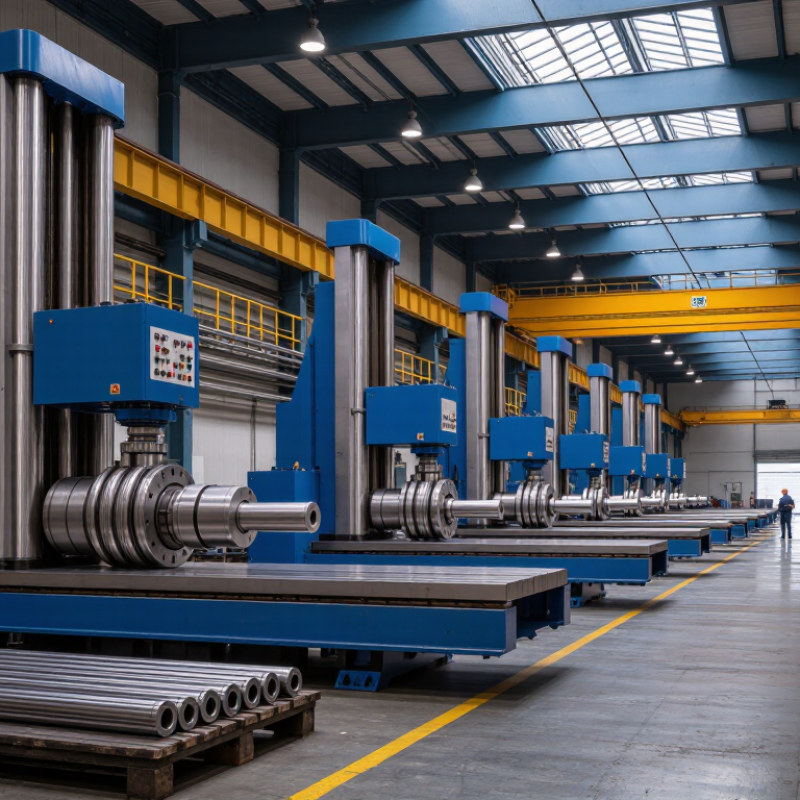
Deep boring machines are designed to create accurate, deep internal holes in metal workpieces. Their key challenge is maintaining straightness, surface quality, and tool stability over long distances. In practical workshops, operators often monitor vibration, coolant flow, and chip removal together. A small alignment error can become serious inside a long bore.
These machines can be classified by boring method, workpiece position, and control system. Single-point boring machines remove material with a guided cutting tool. Gun boring machines use a slender tool and high-pressure coolant for deep, precise holes. Horizontal and vertical types suit different workpiece shapes and loading conditions. CNC models provide repeatable movement, while conventional machines rely more heavily on operator adjustment. This classification is useful, but real machines may combine several features.
Tips: Check workpiece alignment before cutting. Use suitable coolant pressure and inspect chips frequently. Measure bore diameter at several depths, not only at the entrance. Tool deflection deserves attention. I have seen specifications look excellent while actual results changed after setup. That is a reminder that machine selection should include material, bore depth, tolerance, batch size, and operator experience. Sometimes, the most advanced control system cannot correct poor fixturing.