
Top Mixer Pump Manufacturers for Global Buyers?
Selecting the right mixer pump manufacturer is a practical decision, not a simple ranking exercise. Global buyers often compare flow rate, solids content, energy use, materials, and after-sales support. A pump may look efficient in a brochure, yet struggle when sand, sludge, or fibrous waste enters the wet well.
Industry data shows why this category deserves careful attention. MarketsandMarkets’ 2024 Pumps Market report identifies water and wastewater treatment as major demand sectors for industrial pumping equipment. Grand View Research also reports continued growth in the global industrial pumps market, driven by municipal infrastructure, chemical processing, mining, and energy projects. These reports do not isolate every mixer pump application, but they reveal the wider investment pressure surrounding pump reliability and lifecycle cost.
The leading manufacturers usually provide more than a motor and impeller. They offer hydraulic testing, wear-resistant materials, variable-speed options, installation guidance, and regional maintenance networks. In real projects, a stainless-steel shaft, accessible lifting frame, and replaceable wear parts can matter more than a slightly higher laboratory efficiency figure. Downtime is expensive.
Still, no manufacturer is best for every site. That point is easy to overlook. A compact submersible unit may suit a municipal tank, while a heavy-duty mixer pump is better for mining slurry. Buyers should request verified performance curves, solids-handling limits, duty-cycle data, warranty terms, and references from similar facilities. This guide examines top mixer pump manufacturers through those measurable factors, while recognizing that published specifications can never replace field validation.
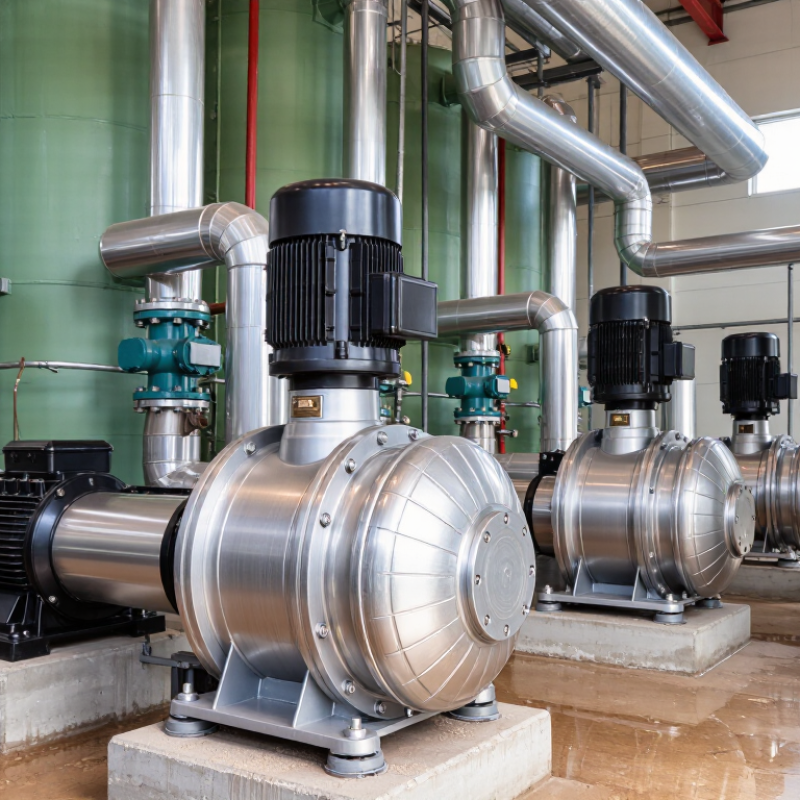
Mixer Pump Basics and Their Role in Global Industries
Mixer pumps combine fluid movement and mechanical agitation in one compact system. An impeller keeps solids suspended while the pump transfers the mixture through pipelines. This design helps wastewater plants, concrete operations, agriculture, mining, and chemical processing sites manage dense fluids. Clear flow matters, but solids size, viscosity, temperature, and pipe length matter just as much.
A reliable mixer pump begins with correct sizing. Engineers usually check flow rate, total head, liquid density, and the percentage of suspended solids. Abrasive slurry may require hardened wear parts, while hygienic processing demands smooth, cleanable surfaces. Seal selection also deserves attention. A small mismatch can cause leakage, overheating, or unplanned maintenance. That assumption fails.
Global buyers should examine test data, material certificates, operating limits, and service support before comparing manufacturers. A strong supplier can explain performance at the buyer’s real duty point, not only quote a maximum capacity. Spare-part availability, local technicians, electrical compatibility, and language-specific manuals also affect lifetime cost. Field technicians often find that poor installation creates problems blamed on the pump. Incorrect alignment, undersized cables, or a blocked intake can reduce performance quickly. Flow is only half. A careful review of site conditions may reveal that a cheaper unit is not the safer long-term choice.
Top Mixer Pump Manufacturers for Global Buyers? - Mixer Pump Basics and Their Role in Global Industries
| Mixer Pump Category | Operating Principle | Typical Flow Range | Typical Pressure or Head | Suitable Media | Common Industries | Primary Selection Considerations |
|---|---|---|---|---|---|---|
| Submersible Mixer Pump | A submerged impeller or propeller creates circulation and solids suspension inside a tank, basin, or pit. | Approximately 10–2,000 m³/h | Low pressure; commonly below 10 m of head | Wastewater, sludge, slurry, liquid manure, and sediment-bearing liquids | Municipal wastewater, agriculture, biogas, mining, and industrial treatment | Tank geometry, solids concentration, submergence depth, seal protection, and motor cooling |
| Positive Displacement Mixer Pump | Rotating lobes, progressing cavities, or pistons move a controlled volume of fluid during each cycle. | Approximately 0.1–500 m³/h | Typically 5–40 bar, depending on design and application | High-viscosity liquids, polymers, sludge, pastes, and shear-sensitive products | Food processing, chemicals, wastewater, pulp and paper, and oil-related processing | Viscosity, abrasive content, pulsation tolerance, dry-running risk, and relief-valve protection |
| Centrifugal Mixer Pump | An impeller converts motor energy into fluid velocity and pressure while promoting continuous mixing. | Approximately 5–5,000 m³/h | Approximately 5–150 m of head | Low- to medium-viscosity liquids, suspensions, cooling water, and process fluids | Chemical processing, water treatment, power generation, mining, and general manufacturing | Required flow, total dynamic head, pump efficiency, cavitation margin, and solids size |
| Progressive Cavity Mixer Pump | A single helical rotor moves through an elastomeric stator to form sealed cavities and deliver steady flow. | Approximately 0.1–300 m³/h | Approximately 2–30 bar | Thick sludge, dewatered sludge, polymers, emulsions, and abrasive suspensions | Wastewater treatment, food production, chemical processing, and mineral processing | Stator compatibility, rotor wear, solids loading, suction conditions, and speed control |
| Twin-Screw Mixer Pump | Two synchronized screws transport and mix fluid, often providing gentle handling and strong suction capability. | Approximately 1–1,500 m³/h | Approximately 2–40 bar | Viscous, multiphase, gas-containing, and shear-sensitive fluids | Food and beverage, pharmaceutical, chemical, marine, and petroleum processing | Hygienic design, cleanability, gas handling, temperature, viscosity, and material compatibility |
| Drum or Tank Mixer Pump | A compact pump and mixing assembly circulates liquid within portable containers, drums, or process tanks. | Approximately 1–100 m³/h | Approximately 2–20 bar | Paints, coatings, chemicals, oils, detergents, and liquid additives | Chemical manufacturing, coatings, cosmetics, food ingredients, and small-batch production | Container opening, immersion depth, batch volume, portability, cleaning, and hazardous-area requirements |
Note: Performance ranges are representative industry ranges for comparison only. Actual capacity, pressure, materials, and efficiency depend on fluid properties, installation conditions, motor selection, and pump configuration.
Related Posts
-

Top Mixer Pumps for Efficient and Reliable Use in China?
-

What is a Mixer Pump and How Does It Work?
-
How to Choose the Best Mixer Pump for Your Needs?
-

The Future of Suction Pump Technology Revolutionizing Efficiency and Performance
-
5 Essential Tips for Choosing the Right Commercial Pump for Your Business Needs
-
Understanding the Importance of Diaphragm Metering Pumps in Precision Fluid Control