
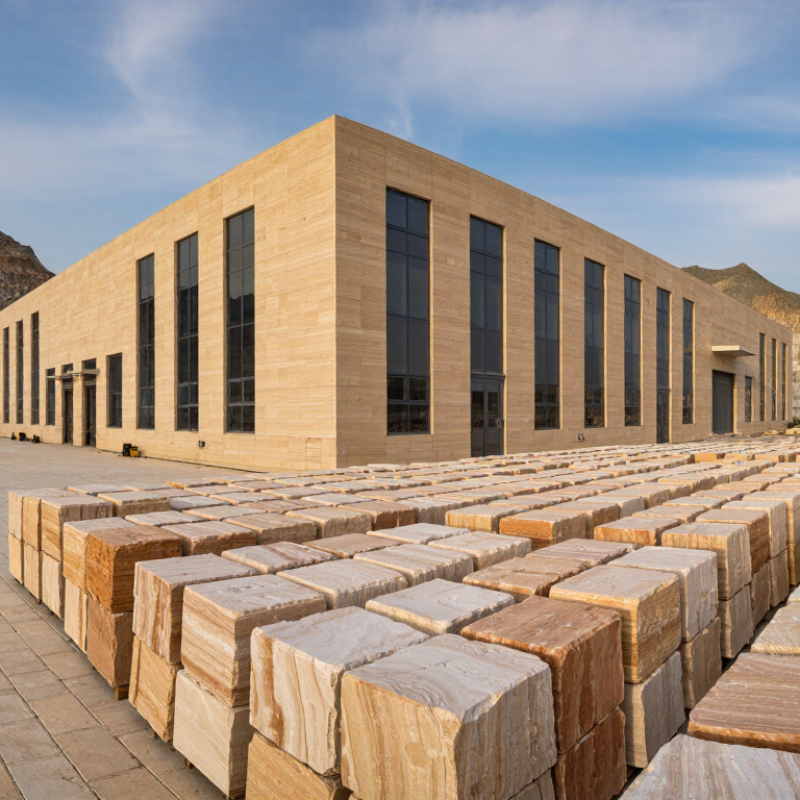
China’s sandstone industry is broad, regional, and closely linked to quarry resources. Suppliers often cluster around areas with established extraction and processing facilities. Their strengths differ in color, grain, block size, finishing, and production capacity. Some handle large architectural projects, while others serve custom residential orders. The word “top” needs careful definition. A polished showroom does not always prove reliable quarry control. That distinction matters.
In practice, buyers should inspect quarry details, production photos, and recent test reports. Useful tests include water absorption, compressive strength, slip resistance, and freeze-thaw performance. Color samples can mislead because sandstone changes under different lighting. A small sample rarely shows natural variation across a full shipment. For outdoor paving, I would request larger mock-ups and clear grading standards. This step feels slow. It prevents expensive surprises.
Reliable Chinese suppliers usually provide consistent technical documents and traceable order information. Their records should cover quarry origin, dimensions, tolerances, surface treatment, packaging, and inspection procedures.
Communication is another practical filter. A capable team explains limitations instead of promising every specification. Unclear answers about grading or replacement policies deserve attention. Price alone is weak evidence. Even experienced buyers can misjudge a supplier after seeing attractive samples. A stronger process compares several suppliers using the same drawings, finish requirements, and testing criteria. The market remains competitive, but every low quote does not reflect efficiency. Sometimes it reflects inconsistent sorting.