
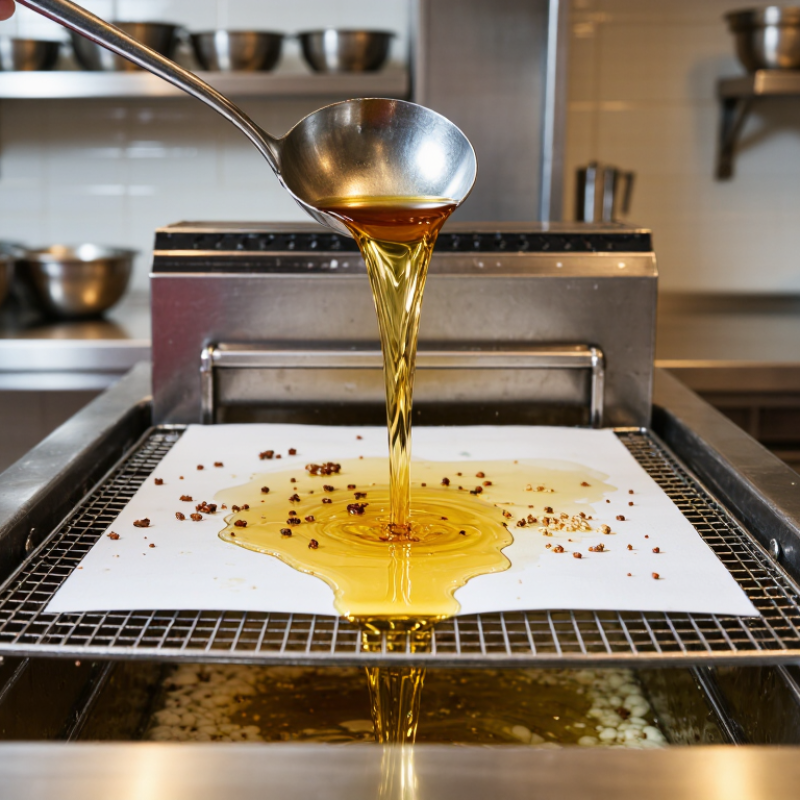
What Is Frying Oil Filter Paper and How Does It Work?
How Frying Oil Filter Paper Is Made
Frying oil filter paper usually begins with purified cellulose fibers from plant-based pulp. Some grades also include carefully selected food-contact fibers for added strength. Manufacturers mix these fibers with clean water, then refine them until the texture becomes smooth and consistent. The mixture is spread across a moving mesh screen. Water drains away, leaving a thin fiber layer.
The wet sheet passes through pressing rollers. These rollers remove excess water and improve fiber bonding. Heated cylinders then dry the paper under controlled conditions. Some manufacturers add a small amount of wet-strength material, but the formulation must suit food-contact requirements. The dried sheet may be lightly pressed to control thickness, porosity, and oil flow. It is then cut into rolls, discs, or sheets for different filtration equipment.
Quality testing checks basis weight, wet strength, flow rate, and particle retention. A useful sheet should hold fried crumbs without tearing easily. It should also let warm oil pass steadily, not painfully slowly. In practical kitchen use, pore size matters as much as thickness. Very fine paper can trap more sediment but may clog quickly. I once underestimated how much moisture affects filtration speed. Oil temperature, paper condition, and the amount of debris all change the result. Filter paper removes suspended particles, but it cannot restore oil damaged by oxidation or excessive heating.