What Is Hexane Solvent Used For?

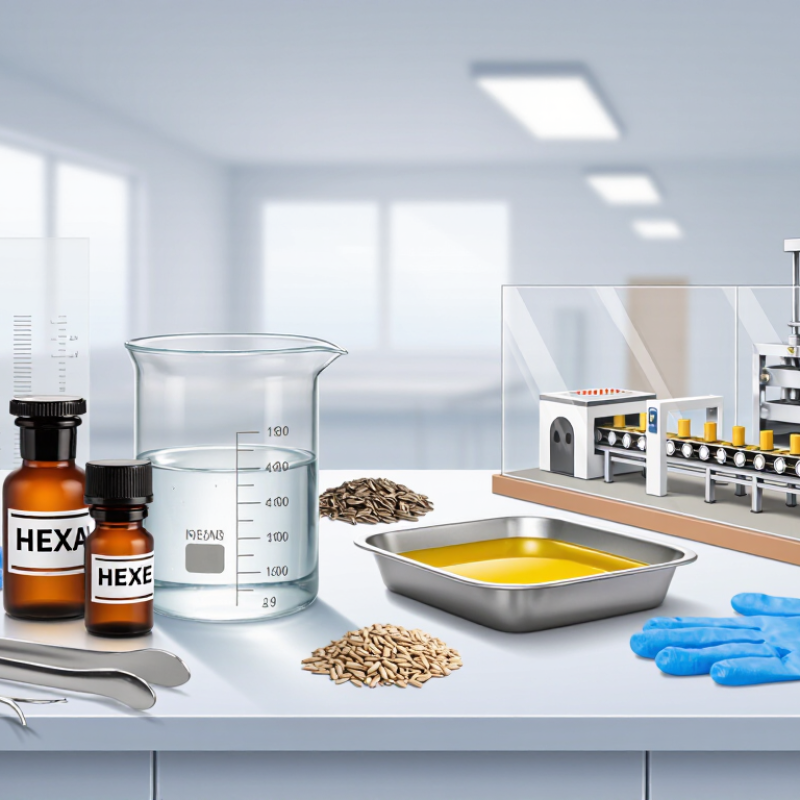
Hexane Solvent is a fast-evaporating liquid used in manufacturing, laboratories, and some commercial products. Its ability to dissolve oils and other nonpolar materials makes it useful where water-based solvents perform poorly. In food processing, approved grades may help extract vegetable oils from seeds. Manufacturers also use hexane in certain adhesives, rubber products, and printing applications. In laboratories, it can serve as a solvent or mobile-phase component during chemical analysis. It often evaporates quickly. That can be helpful, but it also leaves little room for careless handling.

The name “hexane” may refer to pure n-hexane or to a commercial mixture of related hydrocarbons. This distinction matters because composition can affect performance and health risks. Some forms of n-hexane can harm the nervous system after repeated or prolonged exposure, while the liquid and its vapors are highly flammable. A faint smell is not a reliable measure of safe exposure. Workplaces should follow the product’s safety data sheet, use suitable ventilation and protective equipment, and keep the solvent away from ignition sources. Proper disposal also matters. Exact requirements depend on the product and location, so check current workplace guidance rather than relying on a general article. Hexane has practical uses, but it is not a harmless, all-purpose cleaner. Its benefits depend on controlled use, and that deserves careful attention.
What Is Hexane Solvent Used For?

What Is Hexane Solvent and How Is It Produced?

Hexane solvent is a clear, volatile liquid made mostly of six-carbon hydrocarbons. The name can be confusing: commercial solvent grades may contain several related compounds, while n-hexane refers to one specific molecule. Their exact composition depends on the grade and refining process. It matters. Different compositions can affect evaporation rate and performance, so a product specification is more useful than the word “hexane” alone.

Most hexane solvent is produced from petroleum refining streams or natural gas liquids. Refiners separate these materials by boiling range, then use further processing to meet the desired purity and composition. Distillation is central to the separation. The resulting liquid is typically colorless, with a faint petroleum-like odor, and evaporates readily at room temperature. That quick evaporation can suit extraction and cleaning tasks, but it also means vapors need careful control. Hexane is highly flammable and should be handled with appropriate ventilation and protective procedures. One detail is easy to overlook: solvent-grade hexane is not necessarily pure n-hexane. Reading the safety data and product specification gives a clearer picture.

Which Properties Make Hexane an Effective Solvent?

Hexane is a nonpolar liquid, so it dissolves many nonpolar substances, including oils, waxes, and some greases. This property makes it useful in controlled industrial processes and laboratory work, such as separating oil from plant material. Water-based substances usually do not mix well with it. Like dissolves like.

Hexane also evaporates readily. Pure n-hexane boils at about 69°C, while commercial mixtures may have different boiling ranges. That makes solvent removal relatively easy when a process requires a dry product. Its low viscosity helps it spread across surfaces and pass through porous materials. Convenient, but not harmless.

Hexane is highly flammable, and its vapors can pose health risks, especially with repeated exposure. Workplaces need effective ventilation, suitable protective equipment, and careful temperature and ignition control. The exact performance also depends on purity, temperature, and the material being dissolved. A solvent that works neatly in a small test may behave differently at production scale; that gap deserves attention.

How Is Hexane Used in Food and Oil Processing?

What Is Hexane Solvent Used For?

How Is Hexane Used in Food and Oil Processing?

In commercial oilseed processing, hexane helps separate oil from prepared seeds such as soybeans. Seeds are cleaned, cracked, and rolled into thin flakes, increasing the surface area. The flakes pass through an extractor, where hexane dissolves much of their oil. The resulting oil-and-solvent mixture is called miscella. A practical detail: the flakes must be evenly prepared for extraction to work efficiently.

The miscella is heated so the hexane evaporates, then condensed for recovery and reuse. The extracted seed meal also undergoes heating to remove remaining solvent before further processing. European Commission food-industry BAT conclusions report a benchmark range of 0.3–0.55 kilograms of hexane per tonne of processed seed for extraction plants. This is a process-performance figure, not a guarantee for every facility; seed type and operating conditions matter.

Recovery systems, ventilation, and routine monitoring help limit solvent losses and worker exposure. Food processors also test finished products against applicable residue specifications. The process is efficient, but not impact-free: energy is needed for heating and recovery, and small losses can occur. Reported figures deserve context. They may reflect different equipment, feedstocks, or measurement methods, so comparisons between plants are not always straightforward.

What Is Hexane Solvent Used For? How Is Hexane Used in Food and Oil Processing?

Application Material Processed How Hexane Is Used Main Output Important Considerations
Vegetable oil extraction Oil-bearing seeds such as soybeans, rapeseed, and sunflower seeds Hexane dissolves oil from prepared seed material. The resulting oil-and-solvent mixture is separated, and the solvent is removed from the oil. Crude vegetable oil for further refining Commercial extraction commonly uses a petroleum-derived hexane mixture rather than pure n-hexane. Hexane is recovered and reused in the process.
Oil recovery from prepared seed flakes Cleaned, cracked, heated, and flaked oilseeds Solvent is brought into contact with the flakes so oil can transfer into the liquid phase. Oil-rich solvent stream and defatted seed material Seed preparation and controlled solvent contact help make extraction efficient. Industrial systems are designed to contain flammable vapors.
Meal production after extraction Defatted soybean and other oilseed solids After oil has been extracted, the solvent is removed from the solids, commonly using heat and steam in a desolventizing step. Oilseed meal used as an ingredient in animal feed and, where suitable, food products Residual solvent levels are managed through processing controls and applicable food regulations.
Solvent recovery and reuse Oil-and-hexane mixtures and solvent vapors from extraction equipment Hexane is separated from oil by evaporation; vapor is condensed and returned to the extraction system. Recovered solvent and separated oil Recovery reduces solvent loss and emissions. Equipment and operating procedures must account for hexane’s high flammability.
Food-processing solvent applications Specific food ingredients or processing materials, where permitted In certain regulated applications, hexane may be used as an extraction or processing solvent and then removed from the finished material. Extracted ingredient or processed food material Permitted uses and residue requirements depend on the jurisdiction and specific application. Hexane is not used as a food ingredient.

Safety note: Hexane is highly flammable, and inhalation of n-hexane can harm the nervous system. Industrial use requires appropriate ventilation, vapor controls, fire-safety measures, and compliance with occupational and food regulations.

What Other Industrial Applications Use Hexane?

Beyond oil processing, hexane serves as a solvent in several manufacturing settings. Adhesive makers may use it to dissolve rubber and help create fast-drying bonding products. In printing and packaging, it can help dissolve components in inks or coatings, though formulations vary. It also appears in some industrial cleaning operations, where it can remove oily residues from equipment or metal parts.

Clean surfaces matter.

Chemical producers use hexane as a process solvent and as a medium for separating or purifying certain materials. Its low boiling point can make recovery by evaporation practical, but that same property means vapors can build up quickly.

This is not a casual-use solvent. Facilities need suitable ventilation, sealed equipment, and controls to limit ignition sources and worker exposure.

Safety data and process conditions should guide handling, since risks vary with concentration and task. In practice, substitution is sometimes considered, but an alternative may change drying time, product quality, or waste handling. That trade-off deserves a careful review, not an automatic switch.

What Are the Health, Safety, and Environmental Risks of Hexane?

Hexane is used in some industrial processes because it dissolves oils and evaporates quickly. Its risks depend on the product’s composition; commercial solvents may contain several related compounds. Repeated breathing of n-hexane can damage peripheral nerves. Early signs may include tingling, numbness, or weakness in the hands and feet. That matters. Liquid contact can also dry or irritate skin, while splashes may injure eyes.

Hexane vapor ignites easily. It can travel along floors and reach a distant spark, so ordinary-looking work areas can still be hazardous. Vapors may build up where ventilation is poor. Use closed equipment and effective local exhaust, and follow the product safety data sheet for protective gloves and other controls. A respirator should be selected through a proper exposure assessment, not guesswork. Smell is not a reliable warning. Spills can release volatile compounds into the air, and larger releases may contaminate soil or water. Preventing leaks and collecting waste safely reduce those impacts. Controls take effort, and they can be overlooked during routine work; that is a reason to check them regularly.

What Is Hexane Solvent Used For—and What Are Its Risks?

Hexane is used in processes such as extracting vegetable oils and in some adhesives, printing inks, and cleaning products. The chart compares U.S. exposure benchmarks for n-hexane; these values have different purposes and should not be treated as equivalent safety limits.

Health, safety, and environmental risks: Repeated exposure to n-hexane can damage peripheral nerves, while high concentrations can affect the nervous system. Hexane is highly flammable, and its vapors contribute to volatile organic compound emissions that can help form ground-level ozone. The IDLH value is an acute emergency-planning benchmark, not a workplace exposure limit.

Sources: U.S. OSHA Chemical Data for n-Hexane (PEL); NIOSH Pocket Guide to Chemical Hazards (REL and IDLH).

Article Source: