
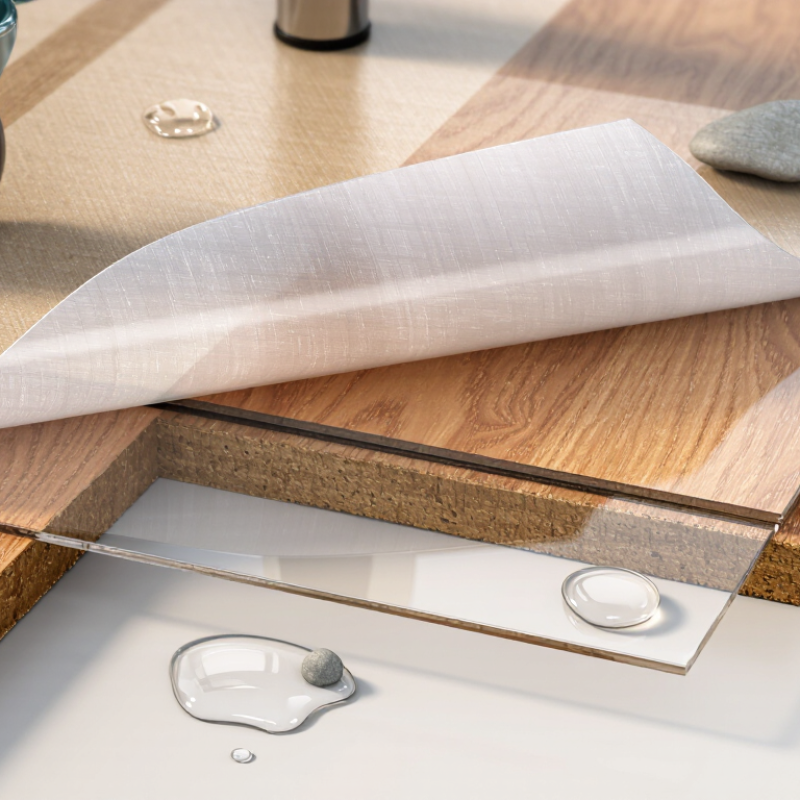
PVC wear layers protect the printed design from scuffs, stains, and daily abrasion. Demand remains significant. A 2024 U.S. floor-covering industry statistical report placed resilient flooring at about one-fifth of total sales. That scale makes specification important. A wear layer should match the room, not merely the product price.
Begin with thickness. Residential rooms often use 0.20–0.30 mm layers. Busy offices, shops, and corridors may require 0.50 mm or more. Yet thicker is not automatically better. The backing, installation, and subfloor still control performance.
Check abrasion data, surface treatment, and warranty conditions. ASTM F925 evaluates chemical resistance, while ASTM F970 measures resistance to static loads. These tests reveal more than thickness alone.
Consider cleaning chemicals, rolling loads, sunlight, and moisture. A polyurethane finish can reduce maintenance, but it cannot repair poor installation. Ask for test reports from an independent laboratory. Confirm test methods, sample thickness, and results.
Marketing language can sound precise. Sometimes it is not. Installers also report that dark surfaces show scratches quickly, even with a strong PVC layer. A practical sample under real lighting may prevent an expensive mistake. Safety matters too, so review slip-resistance results for the intended environment.