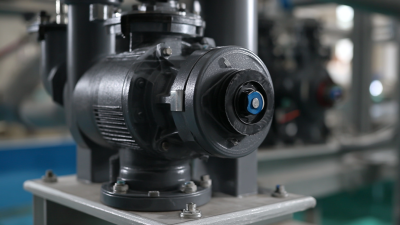
Choosing the right chemical feed pump can determine dosing accuracy, equipment life, and workplace safety. Industrial systems rarely tolerate guesswork. A small flow error may alter water treatment results, damage membranes, or create unstable process conditions. This guide examines seven strong pump options for industrial dosing, focusing on measurable performance rather than attractive specifications.
Each chemical feed pump is assessed through practical criteria. These include flow range, discharge pressure, material compatibility, turndown ratio, control options, and maintenance demands. Diaphragm, peristaltic, solenoid, and progressive cavity designs behave differently in real facilities. A pump handling sodium hypochlorite needs different materials from one dosing abrasive slurry. Operators should also inspect calibration procedures, spare-part access, leak detection, and service support before purchasing.
Field experience often reveals inconvenient details. A pump may deliver excellent laboratory accuracy but struggle with air bubbles or changing viscosity. Some compact models appear economical until diaphragm replacement becomes frequent. No pump wins everywhere. That matters. Reliable selection requires matching the pump to the chemical, pressure, temperature, duty cycle, and control system. Independent technical data, manufacturer documentation, and verified service records provide stronger evidence than marketing claims. The following seven choices offer useful starting points, but site testing remains essential before full-scale installation.
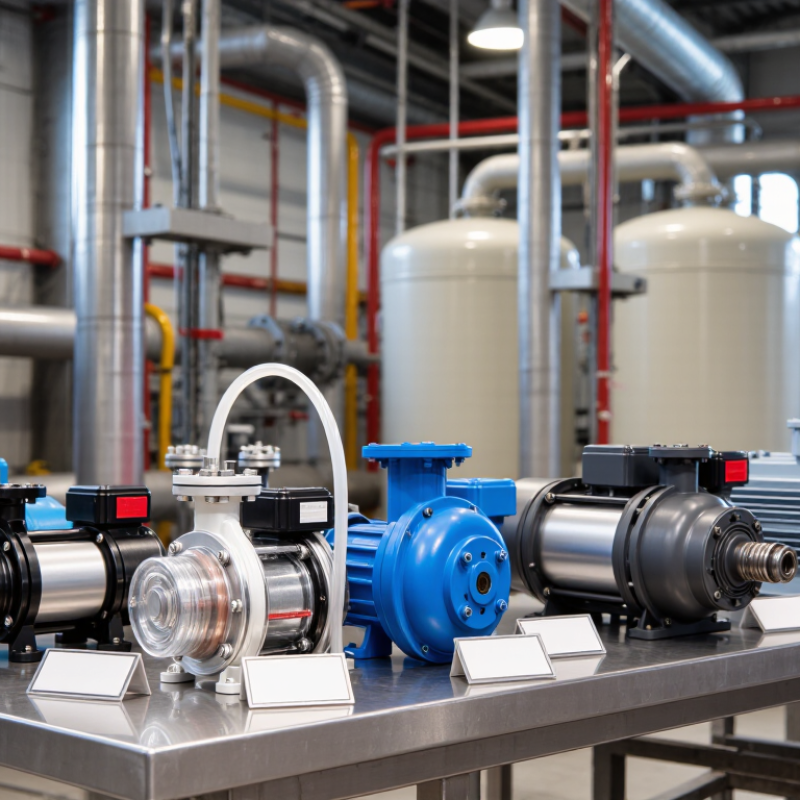
Chemical feed pumps meter liquids into water treatment, manufacturing, and process systems. Their purpose is controlled dosing, not simply fluid transfer. MarketsandMarkets reports that the global metering pumps market may grow from about USD 6.2 billion in 2023 to USD 8.5 billion by 2028. That growth reflects tighter process control and expanding treatment demand.
A typical unit includes a motor, gearbox, diaphragm or plunger, pump head, check valves, and a calibration column. A diaphragm pump uses repeated flexing to create suction and discharge. Stroke length and speed determine the approximate flow rate. Pressure changes can still disturb accuracy. Small details matter. A trapped air bubble may cause uneven dosing, especially with viscous chemicals. Technicians should verify output with a graduated cylinder, not trust the dial alone.
Pulsation dampeners smooth discharge flow. Relief valves protect the pump from blocked lines. Injection quills help distribute chemicals inside the process pipe. Materials must match concentration, temperature, and compatibility data. The U.S. Environmental Protection Agency identifies accurate chemical feed control as important for consistent water treatment performance. However, published efficiency figures can mislead. Laboratory conditions rarely match dirty valves, fluctuating suction levels, or aging diaphragms. Operators should record actual flow, discharge pressure, calibration results, and maintenance intervals. A practical inspection often reveals more than a catalogue specification. Even the best dosing pump fails when suction piping leaks air.
Choosing among the seven best chemical feed pumps starts with the process, not the pump catalog. I have seen reliable equipment fail because engineers ignored viscosity changes during winter operation. Measure the chemical’s concentration, temperature, density, and solids content. Confirm the required flow rate and discharge pressure under real conditions. A pump rated for clean water may struggle with crystallizing or abrasive fluids.
Material compatibility deserves careful attention. Wetted parts should resist the chemical, temperature, and cleaning agents used onsite. Fluoropolymers, ceramics, stainless alloys, and reinforced plastics can perform differently in the same application. Check the manufacturer’s chemical-resistance data, then verify it with actual operating conditions. Diaphragm pumps suit many corrosive duties. Peristaltic pumps protect the fluid from pump components. Plunger and gear designs can support accurate, high-pressure dosing, but they may need stronger maintenance controls.
Accuracy is more than a number on a specification sheet. Evaluate turndown ratio, calibration stability, pulsation, and response to changing backpressure. A flow meter or calibration column can reveal errors that software hides. Select controls that match the plant’s system, including remote signals, alarms, and interlocks. Keep spare diaphragms, tubing, seals, and check valves available. Small parts matter. An overlooked check valve can cause siphoning, overfeeding, or uneven treatment. My own preference is cautious sizing, because oversized pumps often operate poorly at very low stroke rates.
Typical upper-end operating values for widely used industrial dosing pump technologies. Compare flow capacity, discharge pressure, and dosing accuracy when selecting a pump for corrosive chemicals, high-pressure injection, or continuous process control.
Values are representative engineering ranges rather than brand-specific specifications. Actual performance depends on fluid viscosity, temperature, chemical compatibility, installation conditions, and control method.
Industrial dosing rarely has one universal pump. Fluid properties, dose accuracy, pressure, temperature, and maintenance access shape the choice. In field commissioning, small viscosity changes can alter performance more than expected. That detail matters.
Diaphragm metering pumps provide accurate, repeatable strokes for acids, coagulants, and disinfectants. Peristaltic pumps isolate chemicals inside flexible tubing, reducing leakage risk. They suit abrasive slurries, though tubing eventually fatigues.
Progressive cavity pumps handle viscous fluids and suspended solids with steady, low-pulsation delivery. Rotor and stator wear require inspection. Gear pumps deliver viscous chemicals at consistent flow, but particles can damage close clearances.
Piston and plunger pumps generate high pressure for precise, low-flow injection. Their seals need careful monitoring.
Screw pumps move thick or shear-sensitive liquids smoothly across longer transfer runs. Magnetic-drive centrifugal pumps offer seal-free circulation for low-viscosity liquids, but gas or high viscosity can reduce performance.
A sound specification lists flow range, discharge pressure, chemical compatibility, turndown, calibration method, and spare-part life.
Check elastomer compatibility against concentration and temperature, not the chemical name alone. Operators should verify output with a calibration column or timed volume test.
I would not trust a catalog curve without site data. That assumption deserves testing.
Pulsation dampeners and back-pressure valves can improve control, yet extra components may complicate maintenance.
Chemical feed pumps perform well only when installation matches the dosing application. The U.S. Department of Energy reports that pumping systems can consume 25–50% of industrial electricity. Poor installation increases that burden. Mount the pump on a rigid, level base. Keep suction lines short, flooded, and free from sharp bends. Install a calibration column near the suction side when practical. It reveals actual flow, not assumed flow.
Calibration should use the real chemical, concentration, and operating pressure. Collect discharge for a measured period, then compare volume with the controller setting. Repeat the test at low, normal, and maximum stroke rates. A small air bubble can distort results. Very quickly. Record temperature, pressure, stroke length, and collected volume in a maintenance log. API 675 guidance emphasizes controlled-volume performance and repeatable flow, but field conditions can still defeat a perfect factory setting.
Inspection routines should include diaphragm condition, check valves, tubing connections, pulsation, and injection-point blockage. The U.S. Environmental Protection Agency’s water-sector guidance consistently stresses preventive inspection and documented operating checks. Replace brittle tubing before it fails, not after a spill. That advice sounds obvious, yet rushed operators often overlook it. Monthly calibration may suit critical dosing, while less demanding systems may need quarterly verification. Site experience should decide the interval, then measured drift should challenge it. One weakness remains common: operators trust displayed settings more than collected volume. Personally, I would treat every unexplained dosing change as a calibration problem until testing proves otherwise.
Selecting the seven best chemical feed pumps starts with risk, not marketing. Diaphragm, plunger, peristaltic, gear, screw, progressive cavity, and solenoid-driven pumps serve different dosing duties. API 675 recommends controlled-volume pumps with repeatable flow, leak prevention, and suitable relief protection. For corrosive chemicals, wetted materials must match concentration, temperature, and exposure time.
Safety evaluation should include secondary containment, double diaphragms, non-return valves, pressure relief, and emergency isolation. IEC 61511 links safety instrumented functions with defined risk reduction and proof testing. ISO 45001 also requires operational controls and worker competence. These standards become practical at the skid: a blocked injection line can rapidly increase discharge pressure, while a poorly sealed connection may release vapor near an operator’s breathing zone.
Performance needs measurable evidence. The U.S. Department of Energy reports that pumping systems can consume up to 25% of industrial facility electricity, although chemical dosing pumps usually represent a smaller share. Efficiency still matters when pumps run continuously. Test flow accuracy at low, normal, and maximum capacity, then record calibration drift, pulsation, power use, and seal condition. The Hydraulic Institute stresses system-level assessment rather than judging pump efficiency alone. Field reality is messier. Sensors drift. Operators improvise. A laboratory accuracy figure may fail after months of crystallization, temperature cycling, or suction starvation. That gap matters. Trial testing with the actual chemical remains wiser than relying only on a catalogue curve.
| # | Pump Category | Typical Flow Range | Typical Discharge Pressure | Best-Suited Chemicals and Applications | Key Performance Advantages | Primary Safety Considerations | Relevant Standards and Design Checks | Overall Evaluation |
|---|---|---|---|---|---|---|---|---|
| 1 | Motor-Driven Diaphragm Metering Pump | 0.1–2,000 L/h | Up to 250 bar | Coagulants, acids, alkalis, disinfectants, corrosion inhibitors and boiler-water chemicals | High metering accuracy, adjustable stroke and speed, strong turndown capability, and good repeatability for continuous industrial dosing | Use a pressure-relief device, calibration column, leak detection and chemically compatible diaphragm and head materials; prevent dead-heading | API 675 principles for controlled-volume metering pumps; ISO 12100 risk assessment; IEC 60529 enclosure rating where applicable | Best overall |
| 2 | Hydraulically Actuated Diaphragm Metering Pump | 1–10,000 L/h | Up to 400 bar | High-pressure process injection, toxic or hazardous liquids, hydrocarbons and aggressive chemical services | Double-diaphragm configurations can provide high containment integrity, stable delivery at high pressure and suitability for critical process duties | Specify diaphragm-failure monitoring, compatible hydraulic fluid, pulsation dampening, pressure relief and containment drainage | API 675; hazardous-area classification requirements such as ATEX or IECEx when installed in applicable zones; ISO 12100 | Best for hazardous service |
| 3 | Solenoid-Driven Diaphragm Dosing Pump | 0.01–200 L/h | Up to 20 bar | Water treatment, pH correction, sodium hypochlorite, small-scale disinfection and utility chemical dosing | Compact construction, low maintenance, simple electronic control and economical operation for low-to-medium flow rates | Install an injection check valve, anti-siphon protection and a back-pressure valve; verify compatibility with oxidizing chemicals and electrical supply | IEC 60204-1 for machinery electrical equipment where applicable; IEC 60529 for ingress protection; ISO 12100 risk assessment | Best for compact systems |
| 4 | Plunger or Piston Metering Pump | 1–10,000 L/h | Up to 1,000 bar | Low-viscosity liquids, high-pressure injection, water treatment chemicals and process additives without abrasive solids | Very high pressure capability, efficient positive displacement action and accurate delivery when the liquid is clean and non-crystallizing | Provide guarded moving parts, a relief valve and pulsation control; assess seal leakage, fugitive emissions and crystallization at the packing area | API 675; ISO 13709 principles may be relevant to associated centrifugal equipment, but pump-specific requirements must be confirmed by the manufacturer | Best for high pressure |
| 5 | Peristaltic Hose Pump | 0.1–20,000 L/h | Up to 15 bar | Abrasive slurries, lime slurry, polymers, wastewater chemicals and shear-sensitive fluids | Only the hose contacts the chemical, allowing strong containment, dry-running tolerance and straightforward handling of solids-bearing liquids | Select a hose compound compatible with the chemical and temperature; inspect for fatigue, provide hose-burst detection and control maximum discharge pressure | ISO 12100 risk assessment; IEC 60529 for electrical enclosure protection where applicable; chemical compatibility must be validated by immersion or supplier data | Best for abrasive fluids |
| 6 | Progressive Cavity Dosing Pump | 0.5–100,000 L/h | Up to 60 bar | Viscous polymers, emulsions, sludges, flocculants and liquids containing suspended solids | Low-pulsation flow, good solids-handling capability and gentle transport of viscous or shear-sensitive process chemicals | Never operate dry unless specifically designed for it; install dry-run and over-pressure protection, and verify elastomer compatibility and stator temperature limits | ISO 12100; IEC 60529 where applicable; equipment guarding and site electrical-area requirements must be evaluated separately | Best for viscous chemicals |
| 7 | Air-Operated Double-Diaphragm Pump | 1–50,000 L/h | Up to 8 bar | Flammable solvents, corrosive chemicals, contaminated liquids and intermittent transfer or batch dosing duties | Air-powered operation can reduce electrical ignition sources, supports self-priming and handles variable-viscosity liquids and suspended solids | Use suitable grounding and bonding, regulate air pressure, control exhaust discharge, prevent icing and verify diaphragm integrity for hazardous fluids | ATEX or IECEx requirements may apply in classified areas; ISO 12100; local pressure-equipment, ventilation and hazardous-material rules | Best for flexible transfer dosing |
| Performance figures are typical engineering ranges rather than guaranteed ratings. Final selection should confirm chemical compatibility, viscosity, temperature, solids content, suction conditions, required accuracy, pulsation limits, relief protection, materials of construction, hazardous-area classification and applicable local regulations. A complete dosing system should normally include isolation valves, a calibrated relief path, injection protection, back-pressure control, suitable instrumentation and a documented maintenance plan. | ||||||||