How to Choose the Right Mixer Pump for Your Project?

Choosing the right mixer pump starts with the material, not the catalogue. Sludge, concrete slurry, wastewater, and chemical suspensions behave differently. Their solids concentration, particle size, viscosity, temperature, and abrasiveness can change pump performance dramatically. A pump that handles thin wastewater may stall beside a settling basin filled with dense grit. Small details matter.

The U.S. Department of Energy’s Improving Pumping System Performance sourcebook recommends evaluating the complete system, including piping losses, operating conditions, controls, and maintenance. Hydraulic Institute guidance also stresses matching pump duty to the actual system curve, rather than relying on maximum advertised capacity. Recent industrial-pump reports from Grand View Research and MarketsandMarkets identify water treatment, construction, and industrial processing as major demand sectors. However, market data cannot choose a pump for your site. Real installations are rarely tidy.

Dr. Lev Nelik, a recognized pump-system engineer and author, offers a useful principle: “Select the pump for the system, not the system for the pump.” That sentence deserves attention. A mixer pump must move material while maintaining adequate suspension and avoiding excessive shear, blockage, seal wear, or motor overload. Check flow rate, total head, solids content, tank geometry, and duty cycle together. Then question the assumptions. Are solids likely to settle overnight? Will the liquid become thicker in winter? Is cleaning access realistic?

The best choice is not always the largest mixer pump. Oversizing can waste energy, damage fragile particles, and increase operating costs. A careful selection combines field experience, verified data, and honest uncertainty.
How to Choose the Right Mixer Pump for Your Project?

Understand Your Project’s Mixing and Pumping Requirements

How to Choose the Right Mixer Pump for Your Project?

Understand Your Project’s Mixing and Pumping Requirements

The correct mixer pump begins with the material, not the equipment catalogue. Identify viscosity, solid content, temperature, and chemical compatibility before comparing models. A thin liquid may need steady circulation, while mortar or sludge requires stronger agitation and wider flow passages. Measure twice.

Estimate the required flow rate and total head carefully. Include vertical lifting, pipe length, bends, valves, and outlet restrictions. A pump rated for high flow may perform poorly when the discharge line creates heavy resistance. Ask a qualified engineer to verify the duty point against the pump curve. Small calculation errors can cause overheating, poor mixing, or repeated blockages.

Consider how the mixer pump will operate each day. Continuous service demands suitable motor capacity, cooling, sealing, and wear resistance. Intermittent work may allow a different configuration, but frequent starts still affect components. Check access for cleaning and inspect the inlet design for fibrous or abrasive materials. Keep it practical.

On-site conditions also matter. Limited power, uneven flooring, dust, and outdoor exposure can change the selection. I have seen project plans focus on flow rate while ignoring maintenance space. That oversight becomes expensive when an operator cannot remove a clogged screen safely. Leave room for inspection, isolation, and routine replacement parts. A careful trial with the actual material is often more valuable than relying only on laboratory figures.

Compare Mixer Pump Types and Their Operating Principles

Choosing a mixer pump starts with the material, not the motor rating.
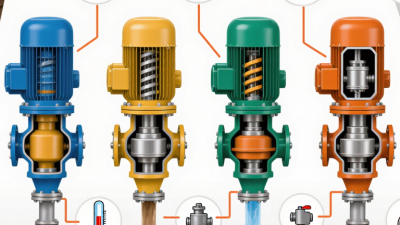
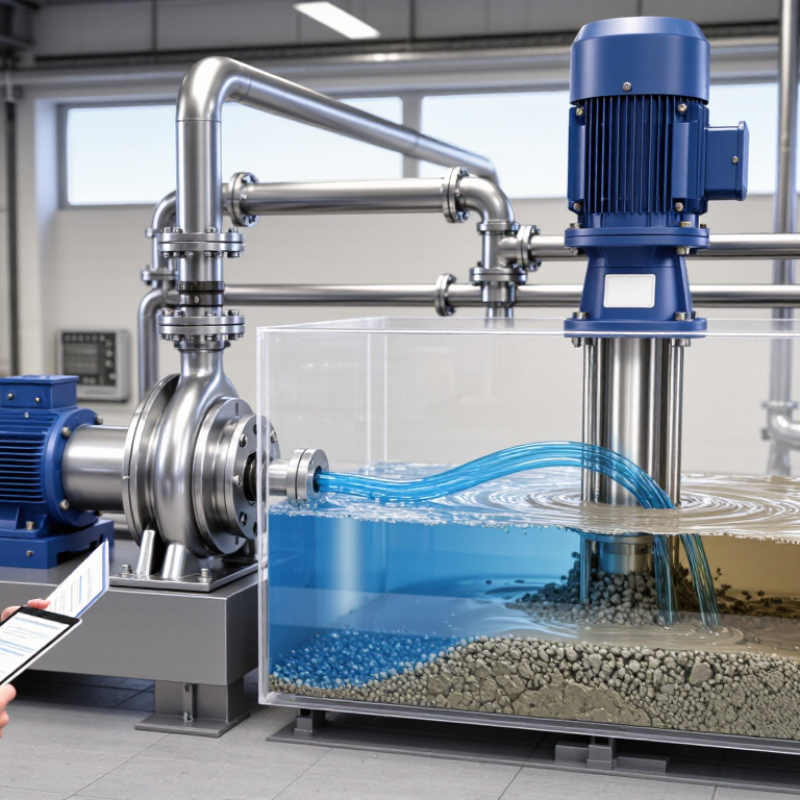
Axial-flow mixers use propeller blades to create broad, low-pressure circulation. They suit thin liquids, equalizing tanks, and suspended solids. Centrifugal mixer pumps use an impeller to generate higher pressure and stronger local turbulence. They are useful for thicker slurries, but abrasive particles can accelerate wear. Progressive cavity pumps move material through sealed cavities. Their steady, low-shear flow protects sensitive mixtures, although dry running can damage the stator quickly.

Operating conditions matter as much as pump type. A submersible mixer works directly inside the tank, reducing suction-pipe losses and installation space. A surface-mounted unit is easier to inspect, but poor suction design may cause air entrainment and unstable flow. The U.S. Department of Energy’s Improving Pumping System Performance sourcebook reports that pumping systems can represent about 25% of industrial motor energy use. Efficiency is not a small detail. Check flow, head, viscosity, solids concentration, and tank geometry together.

Experienced operators also inspect the mixing pattern, not only the discharge pressure. A quiet corner behind a baffle can leave settled material, even when the pump appears powerful. Hydraulic Institute and Europump’s Pump Life Cycle Costs guide indicates that energy may exceed 40% of total pump life-cycle cost. That figure deserves careful site verification. Actual results vary. My practical caution is simple: oversized pumps often create turbulence, heat, and unnecessary electricity use. A short field trial with dye or suspended particles can reveal circulation gaps before permanent installation.

Match Pump Capacity, Power, and Materials to the Application

How to Choose the Right Mixer Pump for Your Project?

Choosing a mixer pump starts with the material, not the price. I have seen pumps struggle when users estimate capacity from water flow alone. Slurry density, viscosity, solids content, and particle size all change performance. Record the required flow rate and discharge head under real operating conditions. A pump rated for 40 cubic meters per hour may deliver far less against a high head. Allow a practical margin, but avoid excessive oversizing. Large pumps can waste energy and mix poorly at low loads.

Power must match the workload and duty cycle. A thick grout needs more torque than a thin suspension. Continuous operation also demands stronger cooling and motor protection. Check starting current, available voltage, and operating hours before selecting the motor. Short tests can mislead. Run the pump with representative material if possible. This exposes settling, clogging, and unexpected vibration.

Material selection protects both the pump and the process. Abrasive sand may require hardened wear parts, while chemicals need compatible alloys, coatings, and seals. Never assume stainless steel solves every corrosion problem. Temperature can also change seal life and material strength. Inspect the suction line, mixing chamber, and impeller after early trials. Small wear marks deserve attention. They often become expensive failures later. Recheck the specification when the recipe, pipe length, or production volume changes. The first selection may not remain correct.

Evaluate Installation Conditions, Safety, and Maintenance Needs

How to Choose the Right Mixer Pump for Your Project?

Choosing the right mixer pump begins with installation conditions, not catalog capacity. Inspect access width, lifting points, power supply, pipe length, fluid temperature, and solids content. A pump that fits the flow chart may still fail in a cramped pit. Measure twice. Leave space for valve removal and motor cooling. Check whether the foundation can resist vibration, especially during startup.

Safety should shape the specification from day one. Confirm guarding, emergency isolation, grounding, and overload protection before ordering. For wet areas, verify enclosure ratings and cable protection against actual site conditions. Operators need clear access to controls and a safe method for clearing blockages. Never treat maintenance as an afterthought. Review the service manual with the installation team, and record inspection intervals. Applicable regulations and a qualified technician should guide final approval. Noise and splash are easy to overlook, yet they can affect nearby work areas.

Tips: Ask the installer to sketch the pump, pipework, and removal path. Include spare seals, bearings, and compatible lubricants in the maintenance plan. Keep a short log of vibration, temperature, and current readings. Trends often reveal wear early. If the project changes, reassess the pump. The original choice may no longer fit.

Select the Best Mixer Pump Based on Cost and Long-Term Performance

How to Choose the Right Mixer Pump for Your Project?

Select the Best Mixer Pump Based on Cost and Long-Term Performance

A mixer pump should match the material, flow rate, and daily operating schedule. Start with the liquid’s viscosity and solids content. A thin slurry needs different hydraulic performance than thick sludge or abrasive mixtures. Check the required head height, pipe distance, and discharge volume before comparing prices. A cheaper unit may consume more power or wear faster under constant use.

In field evaluations, I have seen an attractive quote become expensive after repeated seal replacements. That experience changed how I compare equipment. Purchase cost matters, but energy use, spare parts, service access, and expected operating hours deserve equal attention. Review impeller materials, motor efficiency, seal design, and overload protection. Request test data for conditions close to your project. Specifications can look impressive on paper. Real conditions are less forgiving.

Tips: Estimate total ownership cost over three to five years. Include electricity, labor, maintenance, downtime, and replacement parts. Ask an experienced technician to inspect the installation layout. A pump selected without checking pipe bends may struggle, even with sufficient rated power. Leave room for future capacity, but avoid excessive sizing. An oversized pump can waste energy and create unnecessary wear. Document every assumption before approval. Some estimates will be imperfect, and that is normal. Revising them early is cheaper than correcting equipment later.