Selecting industrial pumps is a performance decision, not merely a purchasing exercise. A pump may look efficient on a catalog page yet waste energy when its operating point misses the system curve. The U.S. Department of Energy’s Improving Pumping System Performance: A Sourcebook for Industry reports that pumping systems can represent 25% to 50% of electricity use in some industrial facilities. That figure makes selection worth careful attention.
This guide presents 10 practical tips for choosing the right industrial pumps. It considers flow rate, total dynamic head, fluid temperature, viscosity, solids content, corrosion risk, materials, controls, maintenance, and lifecycle cost. Small details matter. A clogged strainer, undersized pipe, or oversized motor can quietly increase operating costs every day. Hydraulic Institute standards provide recognized methods for pump testing, efficiency evaluation, and system assessment. The International Energy Agency also identifies motor-driven equipment as a major electricity consumer worldwide, reinforcing the value of efficient pump systems.
Numbers must come first.
Begin with measured demand, not assumptions. Record peak flow, normal flow, suction conditions, discharge pressure, and fluid properties at the installation point. A clean-water test may not represent abrasive slurry, hot oil, or chemically aggressive liquid. The best choice balances reliability, efficiency, safety, and service access. It should also fit the operator’s real capabilities, not an ideal maintenance plan. No checklist is perfect. Site data may be incomplete, and supplier curves can require independent verification. These 10 tips offer a disciplined starting point, while experienced engineers should confirm the final selection through testing and professional review.

Choosing an industrial pump starts with defining the pumping task, not selecting a model from a catalogue. Record the fluid, temperature, viscosity, solids content, flow range, total dynamic head, and operating hours. A pump moving 40 m³/h at 35 metres of head needs a different duty point than one handling 12 m³/h at 70 metres. Check suction conditions carefully. Poor suction design can cause cavitation, vibration, and early seal damage.
Tip: Build a duty profile, not one duty point. Include start-up, peak demand, minimum flow, and future production changes. The U.S. Department of Energy identifies motor-driven systems as using more than half of industrial electricity. The IEA’s Energy Efficiency 2023 report estimates electric motor systems consume about 53% of global electricity. Efficiency matters, but oversizing can waste energy through throttling and unstable operation. I have seen systems selected for an unlikely future capacity, while the pump spends most of its life far from its best efficiency point.
Use measured data whenever possible. Compare pressure readings, flow records, liquid density, and actual pipe losses. Do not rely only on old drawings. They can be wrong. Calculate the required performance at realistic process conditions, then review the pump curve, efficiency curve, net positive suction head, and control method together. A variable-speed drive may help, but only when the operating range and motor compatibility support it. Document every assumption. Small errors in head or flow can become large energy costs over years.
The chart compares representative flow rates and total dynamic head requirements for common industrial pumping tasks. Confirm the actual duty point by accounting for pipe friction, elevation, fluid properties, control losses, and the required operating range before selecting a pump.
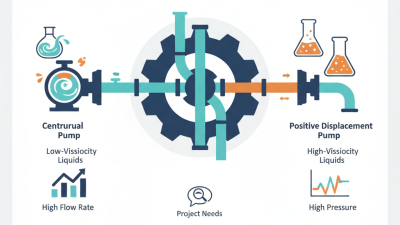
Choosing the right industrial pump starts with the fluid, not the equipment catalog. Measure viscosity, temperature, density, acidity, solids, and vapor pressure. Water-like liquids may suit centrifugal pumps, while thick oils often need positive displacement designs. Abrasive slurries require wear-resistant passages and controlled velocity. Small particles can damage a pump faster than expected.
Check the required flow rate and discharge pressure under real operating conditions. Do not rely only on normal values. Include startup, shutdown, seasonal temperature changes, and possible pressure surges. A pump handling hot liquid may need special seals, cooling, or a different material. Corrosive fluids can attack metal surfaces quietly. Material compatibility charts should guide the selection, but field verification still matters.
I once saw a pump selected for flow alone. It cavitated during peak demand because the suction line was too restrictive. That mistake was expensive. Calculate available net positive suction head, inspect pipe layout, and leave practical maintenance access. Confirm motor capacity, control method, and duty cycle before approval. Short trials with the actual fluid can reveal problems that laboratory data misses. Perfect calculations are rare. Recheck assumptions when the process changes.
Evaluate Materials, Efficiency, Controls, and Maintenance Needs
Tip 1: Match materials to the actual fluid, not its name. Acids, solvents, slurries, and saltwater can attack housings, seals, and impellers differently. Check concentration, temperature, viscosity, and suspended solids. In field inspections, small compatibility errors often become expensive leaks. Stainless steel may work well, but it is not automatically the safest choice.
Tip 2: Measure efficiency across the operating range. A pump running far from its best efficiency point may waste energy and suffer vibration. Compare flow, head, motor load, and expected duty cycles. Variable-speed control can reduce energy use during changing demand. However, speed control adds setup complexity. Poor calibration can erase the expected savings. I have seen that happen.
Tip 3: Choose controls that operators can understand quickly. Pressure sensors, alarms, soft starters, and automatic shutdowns should support safe operation. Avoid unnecessary features. Clear readings matter more than a crowded control panel. Review maintenance access before purchase. Can technicians reach the seal, coupling, filter, and drain without removing major piping?
Tip 4: Estimate maintenance from real working conditions. Abrasive fluids may require frequent inspection. Clean fluids may still damage seals through dry running. Keep spare wear parts available, and record vibration, temperature, and leakage trends. Manufacturer data helps, but site measurements are more dependable. A pump that looks ideal in a catalog may perform poorly after installation. Recheck the decision.
Tip 1: Check the installation space, pipe direction, foundation strength, and access for maintenance.
Tip 2: Measure flow rate and pressure at real operating conditions, not ideal conditions.
Tip 3: Confirm fluid temperature, viscosity, acidity, and the presence of abrasive particles. These details strongly affect materials and seal selection.
Tip 4: Review applicable safety standards, electrical requirements, guarding rules, and emergency isolation procedures. Compliance should be verified by qualified personnel. Small oversights can cause serious downtime.
Tip 5: Match the pump connection size with the existing pipework, but do not rely on size alone.
Tip 6: Check whether the motor, controls, voltage, and available power suit the site.
Tip 7: Examine suction conditions carefully. Poor suction design can create vibration, noise, and cavitation.
Tip 8: Request performance data across the full operating range. One attractive efficiency figure may hide weak performance elsewhere. I have seen this mistake before.
Tip 9: Consider cleaning, inspection, spare parts, and safe working access during installation.
Tip 10: Test system compatibility before purchase, including chemical resistance and temperature limits. A short trial can reveal problems that drawings miss. Keep records of measurements, assumptions, and changes. That habit improves reliability, although it is often skipped.
When choosing an industrial pump, the purchase price is only the visible cost. The U.S. Department of Energy’s Improving Pumping System Performance sourcebook reports that energy may exceed 40 percent of lifetime pumping costs. That figure changes the decision quickly. A cheaper pump can consume more electricity, require frequent seal replacement, and create costly production interruptions.
Build a total ownership cost model before approving the final selection. Include purchase, installation, controls, electricity, maintenance, spare parts, operator time, and planned disposal. Record the actual duty point: flow, head, fluid temperature, viscosity, and operating hours. Then compare efficiency at normal load, not only at the catalog’s best point. Small errors matter. A pump running 15 percent away from its duty point may waste energy and suffer extra vibration. The Hydraulic Institute and Europump life-cycle-cost guidance also identifies energy, maintenance, and downtime as major cost categories, often exceeding initial equipment cost.
Confirm the final selection with a witnessed performance test when practical. Check the guaranteed flow, head, efficiency, motor input, vibration, and NPSH margin. Ask for assumptions in writing. I have seen selections pass paperwork reviews but fail after seasonal flow changes. That is an uncomfortable lesson. Review control-valve losses, standby capacity, material compatibility, and service access with maintenance staff. A spreadsheet is useful, but field knowledge should challenge it. Recalculate ownership costs using local electricity rates and realistic operating hours, not optimistic estimates.
| Tip | Selection Dimension | What to Confirm | Target or Requirement | Option A End-Suction Centrifugal |
Option B Split-Case Centrifugal |
Option C Multistage Centrifugal |
Recommended Decision |
|---|---|---|---|---|---|---|---|
| 1 | Define the duty point | Required flow and differential head at the normal operating point. | 120 m³/h at 45 m head | 120 m³/h; 45 m | 120 m³/h; 45 m | 120 m³/h; 45 m | All options meet the basic duty point. |
| 2 | Check the operating range | Confirm stable operation during minimum, normal, and maximum demand. | 80–135 m³/h; avoid prolonged operation below 70% of best efficiency flow. | 75–135 m³/h | 70–145 m³/h | 85–130 m³/h | Option B provides the widest practical range. |
| 3 | Match the fluid properties | Review temperature, viscosity, solids, corrosiveness, and chemical compatibility. | Water-like liquid; 25–60°C; suspended solids below 1% by mass. | Suitable with coated or stainless wetted parts. | Suitable with coated or stainless wetted parts. | Suitable for clean liquids; solids tolerance is more limited. | Option B offers the best balance for the stated service. |
| 4 | Verify NPSH margin | Compare available NPSH with required NPSH at maximum flow. | Minimum 1.5 m margin after pipe, valve, and temperature losses. | NPSH required: 3.4 m | NPSH required: 2.8 m | NPSH required: 4.1 m | Option B gives the strongest cavitation margin. |
| 5 | Compare hydraulic efficiency | Use pump efficiency at the actual duty point rather than the catalog maximum. | Prefer at least 78% at normal duty. | 72% | 82% | 78% | Option B has the highest duty-point efficiency. |
| 6 | Confirm motor and controls | Check motor rating, service factor, voltage, starting method, and variable-speed control. | 18.0–22.0 kW absorbed power; 30 kW motor selected for operating margin. | 22 kW absorbed; 30 kW motor | 18 kW absorbed; 22 kW motor | 18.9 kW absorbed; 30 kW motor | Option B reduces motor size and electrical demand. |
| 7 | Evaluate installation requirements | Consider footprint, alignment, foundation, piping loads, and access for maintenance. | Existing baseplate with limited maintenance clearance. | Compact; alignment required. | Larger footprint; easier internal access. | Compact; higher piping and seal complexity. | Option A fits best physically; Option B is preferred if space permits. |
| 8 | Estimate maintenance exposure | Include seal, bearing, coupling, spare-part, and planned outage costs. | Planned maintenance budget below $1,300 per year. | $1,400 per year | $1,100 per year | $1,600 per year | Option B has the lowest estimated annual maintenance cost. |
| 9 | Compare total ownership cost | Include purchase, installation, electricity, maintenance, and planned replacement parts. | Five-year evaluation; 4,000 operating hours per year; electricity at $0.12/kWh. |
Purchase: $7,800 Energy: $9,890/year Five-year TCO: $64,250 |
Purchase: $12,500 Energy: $8,640/year Five-year TCO: $61,200 |
Purchase: $10,800 Energy: $9,070/year Five-year TCO: $64,160 |
Option B has the lowest estimated five-year TCO. |
| 10 | Confirm the final selection | Validate the data sheet, guaranteed performance, materials, documentation, and lifecycle assumptions. | Approve only after vendor-neutral technical review and site verification. | Conditional selection | Preferred selection | Conditional selection | Select Option B, subject to final NPSH, footprint, and materials confirmation. |