
What Are the Top 10 Types of Pumps in China?
China’s pump industry serves farms, factories, buildings, mines, and municipal water systems. The equipment varies widely. A pump moving clean water through a high-rise has a different job from one handling abrasive slurry or thick oil. This guide explores ten widely used types of pumps in China, including centrifugal, multistage, submersible, sewage, diaphragm, gear, screw, and metering pumps. It is a practical overview, not an official sales ranking; availability and popularity vary by region and application.
Pump selection depends on more than the product name. Flow rate, head, fluid properties, operating temperature, and maintenance access all matter. A small detail can change the choice. Think of a narrow pump room, a fluid carrying grit, or a system that must run continuously. Pump engineer Igor J. Karassik’s work is associated with careful, system-based pump selection. A useful editorial rule in that spirit is: “Choose for the duty, not just the pump type.” This is a guiding summary, not a verified direct quotation.
The categories can overlap. A submersible pump, for example, may also be designed for sewage or drainage. That makes labels useful, but imperfect. The sections ahead explain how each type works, where it is commonly used, and what buyers should compare before choosing. No single pump suits every site. The best match is often less obvious than the catalogue makes it seem.
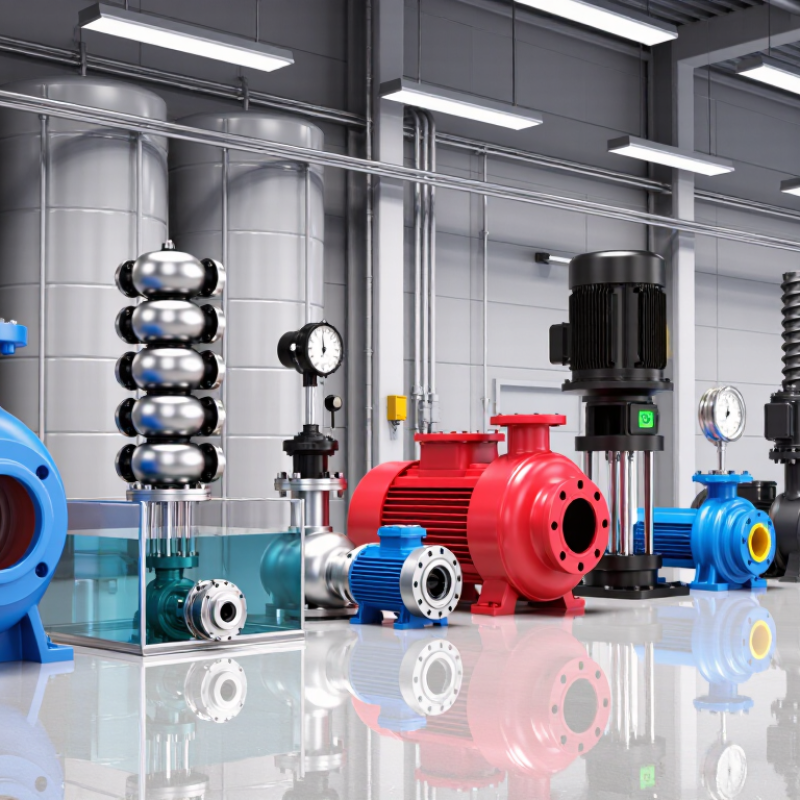
How Pumps Are Classified in China
How Pumps Are Classified in China
In China, pump classification usually starts with the way a machine transfers energy. Rotodynamic pumps include centrifugal, axial-flow, and mixed-flow designs; positive-displacement pumps include gear, screw, diaphragm, and plunger types. The distinction matters: a centrifugal pump suits steady water circulation, while a plunger pump can deliver small, controlled volumes at higher pressure. Some labels overlap. A unit may be centrifugal, multistage, horizontal, and intended for water supply—all at once.
Engineers also sort pumps by structure, installation, liquid, and duty. Common descriptors include single-stage or multistage, submersible or surface-mounted, and clean-water or slurry service. China’s GB/T 3216-2016 standard addresses hydraulic performance acceptance tests for rotodynamic pumps; it supports performance comparison, not a complete naming system. A practical caution: product catalogs may group pumps differently, so check the operating curve and specified liquid, not just the category name.
Energy use helps explain why correct selection matters. The U.S. Department of Energy’s 2002 industry sourcebook, Improving Pumping System Performance, reports that pumping systems use nearly 20% of global electricity and can account for 25–50% of energy use in some industrial plants. These are broad international figures, not China-specific measurements. Still, they show why matching flow and head to actual demand is important. Oversizing is easy to miss. It can leave a pump throttled for years.
What Are the Top 10 Types of Pumps in China? — How Pumps Are Classified in China
This practical overview covers ten pump types used across Chinese industry, utilities, agriculture, and building services. The list is not a market-share ranking. Classification systems may overlap: for example, a submersible pump describes an installation arrangement, while centrifugal describes its operating principle.
| No. | Pump Type | How It Works | Typical Flow and Pressure Characteristics | Common Applications | Suitable Fluids and Considerations |
|---|---|---|---|---|---|
| 1 | Centrifugal Pump | A rotating impeller transfers energy to the liquid, which is guided through the casing and discharged. | Generally suited to continuous flow. Available in designs for low to high flow and a range of heads. | Water supply, irrigation, industrial circulation, cooling systems, and municipal services. | Commonly handles clean or moderately contaminated liquids. Material and seal selection depend on temperature, corrosion, and solids content. |
| 2 | Axial-Flow Pump | A propeller-like impeller moves liquid mainly parallel to the pump shaft. | Designed for very high flow at relatively low head. | Drainage, flood control, irrigation, and circulation in large water systems. | Typically used for water and other low-viscosity liquids. Installation and operating conditions affect performance. |
| 3 | Mixed-Flow Pump | The impeller moves liquid in both axial and radial directions. | Combines higher flow than many radial-flow designs with more head than a typical axial-flow pump. | Agricultural irrigation, drainage, water transfer, and some industrial water systems. | Usually selected for water-like liquids. The required flow, head, and intake conditions guide model selection. |
| 4 | Reciprocating Piston or Plunger Pump | A piston or plunger moves back and forth in a chamber, drawing in and displacing a measured volume of liquid. | Can produce high pressure at comparatively low flow. Flow is often pulsating unless damped. | Pressure testing, metering, hydraulic systems, and high-pressure cleaning or process duties. | Can handle many liquids, subject to the pump’s materials, seals, viscosity limits, and solids tolerance. |
| 5 | Diaphragm Pump | A flexible diaphragm changes chamber volume to draw in and discharge liquid; check valves control flow direction. | Positive-displacement operation; flow is commonly pulsating. Designs vary from low-pressure transfer to higher-pressure service. | Chemical dosing, wastewater treatment, paint and coating transfer, and handling of certain slurries. | Can isolate the liquid from drive components. Diaphragm and valve materials must be compatible with the fluid. |
| 6 | Gear Pump | Rotating gears carry liquid from the inlet to the outlet in spaces between the gears and casing. | Positive-displacement flow; commonly suited to steady transfer of viscous liquids at moderate to high pressure. | Lubrication systems, fuel transfer, hydraulic equipment, and industrial process lines. | Best suited to clean or suitably filtered liquids. Abrasive solids can cause wear, and viscosity affects performance. |
| 7 | Screw Pump | One or more rotating screws move liquid along the pump axis in cavities formed by the screw and casing. | Positive-displacement operation with relatively smooth flow; designs cover a broad range of flow and pressure duties. | Oil transfer, process industries, wastewater service, and some marine or industrial systems. | Depending on design, it can handle viscous liquids and some liquids containing solids. Wear and fluid compatibility should be assessed. |
| 8 | Rotary Vane Pump | Sliding vanes in a rotor form changing-volume chambers that move liquid through the pump. | Positive-displacement flow, commonly used for relatively steady transfer at moderate flow rates. | Fuel handling, lubrication, and transfer of selected industrial liquids. | Fluid cleanliness, lubricity, temperature, and material compatibility are important to vane life and performance. |
| 9 | Peristaltic Pump | Rollers or shoes compress a flexible tube, pushing liquid forward while the fluid remains inside the tube. | Positive-displacement metering or transfer; flow is pulsating and depends on tube size and drive speed. | Precise dosing, laboratory processes, water treatment, and transfer of shear-sensitive or abrasive liquids. | The tube separates the liquid from the pump mechanism. Tube material and replacement interval depend on the fluid and duty cycle. |
| 10 | Jet Pump | A high-velocity motive-fluid jet creates a low-pressure region that entrains and moves another fluid. | Has no conventional rotating impeller in the pumped-fluid passage; efficiency and capacity depend on system conditions. | Water lifting, priming, mixing, and selected industrial or utility applications. | May have few moving parts in the fluid path, but requires a motive-fluid supply and appropriate system design. |
Related Posts
-
How to Choose the Right Commercial Pump for Your Business Needs
-
Types of Pumps and Tips for Selecting the Right One?
-
Top 10 Commercial Pump Types for Efficient Water Management Solutions?
-
10 Tips for Choosing the Right Industrial Pumps
-
Why is Pump Technology Essential for Modern Industries?
-
How to Choose the Right Types of Pumps for Your Needs?