
10 Tips to Choose the Right Types of Pumps Globally?
Choosing the right pump can determine whether a water, chemical, or process system performs reliably for years. Yet many buyers focus only on flow rate and purchase price. That approach often fails. Pump selection also depends on fluid properties, pressure, temperature, pipe length, elevation, power supply, and maintenance access.
This guide introduces ten practical tips for comparing different types of pumps across global operating environments. Centrifugal, positive displacement, diaphragm, submersible, gear, and screw pumps each solve different problems. A clear understanding of their strengths prevents costly mismatches. For example, a centrifugal pump may handle clean water efficiently, while a diaphragm pump may better manage abrasive or chemically sensitive fluids. Small details matter, including seal materials and the risk of dry running.
Local conditions deserve equal attention. A pump installed in a humid coastal plant may need stronger corrosion protection. A remote agricultural site may require simple controls and easily available spare parts. International standards, manufacturer documentation, energy performance, and qualified technical advice should guide the final decision. Supplier claims also need careful checking. Marketing language can sound convincing.
Not every recommendation will fit every project. That is the uncomfortable part. Engineers should verify calculations, request performance curves, and test assumptions before approval. A practical review should compare efficiency, lifecycle cost, safety, noise, service intervals, and installation requirements. The goal is not to select the most powerful pump. It is to select the most suitable pump for the actual duty, environment, and people responsible for operating it.
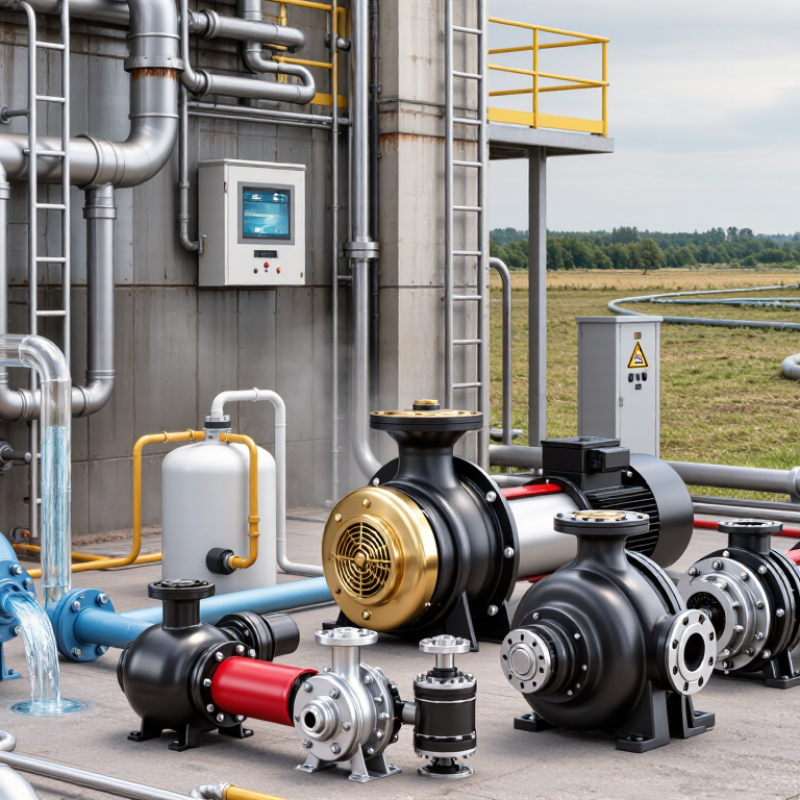
Understanding Pump Types and Their Core Applications
Choosing the right pump starts with understanding its working principle, not its appearance. Centrifugal pumps suit clean water, cooling systems, and general circulation. They use rotating impellers to create flow efficiently. Positive displacement pumps move fixed volumes under pressure. They work well with viscous fluids, dosing tasks, and controlled transfer. Diaphragm pumps can handle air, suspended solids, and chemically difficult liquids. Their pulsating flow may require additional equipment.
Submersible pumps operate below the liquid surface, making them practical for drainage, wells, and wastewater pits. Axial-flow pumps move large volumes at low pressure, often supporting irrigation or flood-control systems. Mixed-flow designs sit between axial and centrifugal types. They can manage moderate pressure and substantial flow. Every application needs careful attention to viscosity, temperature, solids, suction conditions, and required head. Small errors matter.
Field inspections often reveal problems hidden in product sheets. A pump may meet the flow target but consume excessive energy. A technically suitable model may also suffer from cavitation when suction conditions are poor. Noise, vibration, and frequent seal damage deserve serious attention. International projects add voltage, material, maintenance, and local safety requirements. I have found that selection tables simplify decisions, but they can encourage overconfidence. Engineers should verify calculations with operating data and manufacturer documentation. A trial installation may still teach something unexpected. That is not failure; it is useful evidence.
10 Tips to Choose the Right Types of Pumps Globally? - Understanding Pump Types and Their Core Applications
| Tip | Pump Type | Operating Principle | Core Applications | Key Selection Criteria | Main Limitations |
|---|---|---|---|---|---|
| 1 | End-Suction Centrifugal Pump | Uses a rotating impeller to convert motor energy into fluid velocity and pressure. | Clean-water transfer, irrigation, building services, cooling-water circulation, and general industrial systems. | Best for low-to-medium viscosity liquids and relatively steady flow. Select by required flow rate, total dynamic head, liquid temperature, and material compatibility. | Performance decreases with highly viscous liquids, excessive solids, or operation far from the best-efficiency point. |
| 2 | Multistage Centrifugal Pump | Several impellers are arranged in series so that pressure is increased in stages. | Boiler feedwater, high-rise water supply, reverse-osmosis pretreatment, pressure boosting, and high-pressure process service. | Choose when high head is required at a moderate flow rate. Check allowable pressure, stage count, suction conditions, and water temperature. | More sensitive to abrasive solids and dry running; maintenance is generally more complex than for a single-stage pump. |
| 3 | Mixed-Flow or Axial-Flow Pump | Impellers produce predominantly axial or partially radial flow, allowing large volumes to move efficiently at low head. | Flood control, drainage, irrigation channels, cooling-water intake, water management, and circulation systems. | Suitable for very high flow and low-to-moderate head. Evaluate intake design, submergence, debris protection, and seasonal operating conditions. | Generally unsuitable for high-pressure service; poor inlet conditions can cause air entrainment, vibration, or cavitation. |
| 4 | Gear Pump | Meshing gears trap and transport a nearly fixed volume of liquid from suction to discharge. | Lubricating oils, fuels, polymers, resins, adhesives, and other clean, viscous liquids. | Choose for accurate, steady displacement and moderate flow. Confirm viscosity range, speed, differential pressure, temperature, and lubrication properties. | Not ideal for liquids containing hard solids; excessive differential pressure can increase wear and internal leakage. |
| 5 | Twin-Screw or Progressive-Cavity Pump | Rotating screws or a rotor-and-stator arrangement move liquid through sealed cavities. | Sludge handling, wastewater, food products, polymers, oils, and shear-sensitive or high-viscosity fluids. | Useful for viscous liquids, solids-bearing fluids, and controlled flow. Check solids size, viscosity, elastomer compatibility, speed, and dry-run protection. | Dry running, abrasive particles, or unsuitable elastomers can cause rapid wear; some designs require careful maintenance. |
| 6 | Air-Operated Double-Diaphragm Pump | Compressed air alternately flexes two diaphragms, creating suction and discharge cycles. | Chemical dosing, paint and coating transfer, wastewater, slurry, hazardous-area service, and intermittent transfer duties. | Good for variable flow, solids-bearing liquids, and self-priming applications. Select diaphragm material, air quality, pressure, and chemical compatibility. | Compressed-air consumption can be high; pulsating flow and diaphragm wear may require additional controls or maintenance. |
| 7 | Piston or Plunger Pump | A reciprocating piston or plunger displaces a defined volume during each stroke. | High-pressure water injection, metering, pressure testing, chemical dosing, and hydraulic applications. | Select according to required pressure, flow accuracy, stroke rate, liquid properties, seal design, and pulsation-control requirements. | Produces pulsating flow and may need dampeners; unsuitable for liquids with excessive abrasive solids unless specially designed. |
| 8 | Peristaltic Pump | Rollers or shoes compress a flexible tube, moving liquid through the tube without direct contact with pump components. | Abrasive slurries, laboratory fluids, wastewater chemicals, sanitary transfer, and low-flow metering. | Choose when contamination control, gentle handling, or abrasive-fluid capability is important. Verify tube material, pressure, flow range, and replacement interval. | Tube fatigue limits pressure and service life; flow may pulsate and capacity can vary as the tube wears. |
| 9 | Submersible Sewage or Slurry Pump | The motor and pump operate while submerged, using an impeller designed for solids handling. | Municipal wastewater, construction-site drainage, stormwater, sewage lifting stations, and industrial effluent transfer. | Check solids passage, liquid level, cable length, motor cooling, corrosion resistance, head, flow, and protection against clogging. | Access for inspection can be difficult; cable, seal, and motor protection are critical in submerged installations. |
| 10 | Magnetic-Drive or Sealless Pump | A magnetic coupling transmits motor torque to the impeller without a conventional shaft seal. | Corrosive chemical transfer, plating systems, laboratory equipment, semiconductor processes, and leak-sensitive services. | Prioritize zero-emission containment, chemical compatibility, liquid temperature, vapor pressure, and minimum-flow requirements. | Usually unsuitable for dry running; magnetic coupling limits can be affected by high viscosity, solids, or excessive temperature. |
Related Posts
-
What Are the Top 10 Types of Pumps in China?
-
How to Choose the Right Commercial Pump for Your Business Needs
-
Types of Pumps and Tips for Selecting the Right One?
-
Top 10 Commercial Pump Types for Efficient Water Management Solutions?
-
How to Choose the Right Types of Pumps for Your Needs?
-
10 Tips for Choosing the Right Industrial Pumps